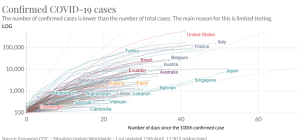
The next time Trump touts testing for COVID-19 as some kind of success, remember this: “Pandemic: The South Korean Case.”
My latest post at BillMoyers.com.
The next time Trump touts testing for COVID-19 as some kind of success, remember this: “Pandemic: The South Korean Case.”
My latest post at BillMoyers.com.
This post first appeared at BillMoyers.com on Mar. 27, 2020. Be sure to check out the animation accompanying it there.
Trump’s magical thinking and contradictory messages about the coronavirus have created public confusion. The consequences are becoming catastrophic.
Lying to the Public for Weeks
Jan. 3: The director of the CDC warns HHS Director Alex Azar that China has potentially discovered a new coronavirus. Azar tells his chief of staff to notify the National Security Council. This is a very big deal, Azar says.
Jan. 18: Azar notifies Trump about the virus.
Feb. 10: “I think the virus is going to be — it’s going to be fine,” Trump says.
Feb. 14: “We have a very small number of people in the country, right now, with it,” Trump says. “It’s like around 12. Many of them are getting better. Some are fully recovered already. So we’re in very good shape.”
Feb. 19: “I think it’s going to work out fine. I think when we get into April, in the warmer weather, that has a very negative effect on that and that type of a virus,” Trump says. “So let’s see what happens, but I think it’s going to work out fine.”
Feb. 24: The pandemic is “very much under control in the US,” Trump tweets.
Feb. 25: “You may ask about the coronavirus, which is very well under control in our country. We have very few people with it, and the people that have it are … getting better. They’re all getting better. … As far as what we’re doing with the new virus, I think that we’re doing a great job.” He repeats this self-adulation in a tweet.
Feb. 26: “Because of all we’ve done, the risk to the American people remains very low,” Trump says. “When you have 15 people, and the 15 within a couple of days is going to be down to close to zero. That’s a pretty good job we’ve done.”
Feb. 27: “Only a very small number in U.S. & China numbers look to be going down. All countries working well together!” Trump tweets.
Also on Feb. 27: “It’s going to disappear. One day it’s like a miracle, it will disappear,” Trump tells attendees at an African American History Month reception in the White House Cabinet Room.
Feb. 28: At a campaign rally, Trump politicizes concerns about his handling of the growing crisis as a “Democratic hoax.”
March 4: “Some people will have this at a very light level and won’t even go to a doctor or hospital, and they’ll get better,” Trump says. “There are many people like that.”
Around Mar. 9: The White House task force receives results from a new study by the Imperial College of London projecting that the government’s failure to act swiftly and aggressively could result in 2 million American deaths.
Mar. 10: Trump says, “It will go away, just stay calm. It will go away.”
The Truth Catches Up
Mar. 13: Trump declares a national emergency, but he does not invoke the Defense Production Act that would mobilize national resources to fight the pandemic.
Mar. 14: Dr. Anthony Fauci, one of the world’s foremost authorities on infectious diseases, the director of the US National Institute of Allergy and Infectious Diseases (NIAID) since 1984, and an adviser to six presidents, publicly urges consideration of a nationwide shutdown similar to those in Europe: “I would prefer as much as we possibly could. I think we should really be overly aggressive and get criticized for overreacting.”
Mar. 14-15: The Imperial College researchers send Trump’s task force an early copy of their final written report. By then, some US states and cities have already imposed stay-at-home orders and business closings.
Mar. 16: Trump reverses his earlier rhetoric of denial. Now he recommends that for 15 days Americans avoid gathering in groups greater than 10, work from home, avoid unnecessary shopping trips, and refrain from eating in restaurants.
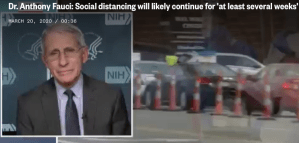
Mar. 20: Dr. Fauci predicts that Americans will most likely have to stay at home and practice social distancing for “at least several weeks.”
Lagging Indicators of Leadership Failure
Thanks to Trump’s failure to emphasize the seriousness of the pandemic, state governors who took the threat seriously are having difficulty persuading citizens to stay at home. Gov. Andrew Cuomo (D-NY) enlisted New Yorkers to get his message across:
https://www.youtube.com/watch?v=6sZIdZueiQg
https://www.youtube.com/watch?v=RxH_uHFwj30
https://www.youtube.com/watch?v=yTLiYHIIOjE
Like many governors throughout the country, Gov. Cuomo is fighting what economists would call lagging indicators of Trump’s false messaging and administrative incompetence. Trump’s leadership failure produced another lagging indicator: the testing crisis. Without a sufficient medical infrastructure to test, identify and isolate patients, America has been unable to follow South Korea’s successful containment strategy, even though that country and the US reported their first coronavirus cases on the same day — Jan. 20.
Other lagging indicators include the more rapid spread of the virus in the US due to lack of testing and hospitals with too few beds, insufficient ICU space, and an insufficient number of ventilators for those who will need them to survive.
The worst lagging indicator is, of course, hourly increases in American coronavirus deaths.
From Bad to Worse
Mar. 23: Only seven days into his “stay at home” guidance — Trump reverses himself again. Acknowledging that his own public health experts disagree, he says, “America will, again, and soon, be open for business. Very soon… We cannot let the cure be worse than the problem itself.”
Mar. 24: The World Health Organization warns that with more that 46,500 confirmed cases and nearly 600 deaths, the US has the potential to become the new epicenter of the global crisis. Only a week earlier, the US had a total of 6,300 cases in and 108 deaths.
Also on Mar. 24: Trump says he wants the country “back to work” by Easter. That’s Apr. 12. “Easter is a very special day for me,” he says. “Easter Sunday, and you’ll have packed churches all over our country.”
Mar. 25: The spokesperson for the World Health Organization who had warned that the US had the potential to become the next epicenter of the virus says that there is still time to “turn it around.” Sending all Americans back to work by Easter was not among her recommendations. Rather, the formula for success is testing people, finding each case, identifying people who have come into contact with those who have been infected, isolating those who are ill or who have been exposed, and quarantining, she says.
“Finally, getting the people who are ill to treatment — and when you do that, really, really protect your health workers,” she says.
Gov. Cuomo and other governors will make state-specific decisions about whether to “reopen the economy.” Unless Attorney General William Barr finds a way to upend federalism for his boss, there’s nothing Trump can do about it — except spout messages on which too many Americans will rely at their peril.
During a pandemic, incompetent leadership is deadly. Heed the advice of medical professionals who know what they’re talking about.
This post first appeared at Dan Rather’s News & Guts on Mar. 16, 2020.
How many ventilators does the US have on hand to fight the pandemic?
At Trump’s coronavirus task force press briefing on Sunday, Mar. 15, Secretary of Health and Human Services Alex Azar refused to answer, citing “national security.”
Less than 10 minutes on the internet yielded the answer: 172,700.
Earlier in the day, Dr. Anthony Fauci said that the US has about 12,700 ventilators stockpiled. On Feb. 14, 2020, the Center for Health Security at Johns Hopkins Bloomberg School of Public Health reported that the US has approximately 160,000 ventilators in acute care hospitals. The number in use at any given time is unknown.
Why did Azar refuse to provide that number? Because it’s bad news. Stonewalling is a reflexive response and a defining characteristic of the Trump administration. This time, it’s endangering the health of all Americans.
Why Facts Really Matter Now
During an American Hospital Association webinar in February, Dr. James Lawler, a professor at the University of Nebraska Medical Center, projected that the coronavirus pandemic could infect 96 million people and hospitalize 4.8 million of them. In the entire country, the US has approximately 925,000 staffed beds (including all types).
Of those 4.8 million projected hospital patients, 1.9 million could require intensive care beds. We have about 98,000 (included in the above total).
Of those 4.8 million hospital patients, 960,000 could require ventilators. We have 172,700. Even more importantly, according to the Johns Hopkins study, the limiting factor for treatment during a pandemic will be respiratory therapists. Dr. Lawler also calculates that the number of US deaths from the virus could be 480,000 — 10 times worse than the mortality rate for the seasonal flu.
If we can spread out the number of infected victims so they show up at hospitals over a longer period of time, we can reduce peak demand for hospital admissions, ICU beds, ventilators, and necessary medical personnel. We would have a chance to avoid the situation facing Italy, where doctors are making life and death decisions about patients who get the treatment they need and those they send home to die. More available beds, ventilators, and therapists means more lives saved. And by we, I mean all of us.
That’s the urgency of “flattening the curve.”
If CNBC’s reporting is correct, the White House task force has it backwards. Under its so-called “optimistic scenario,” peak virus in the US would come one month from Saturday, Mar. 14. Under its “pessimistic scenario,” peak virus would occur two months later. But as the peak becomes earlier, the number of deaths from an overtaxed medical system increases. And that doesn’t take into account spillover deaths from patients requiring care they cannot get for other diseases and illnesses.
Azar and Trump’s entire task force could use these facts to drive home simple messages — wash your hands, no handshakes, social distancing, stay home if you can — every individual can make a difference. Instead, they’re playing to an audience of one, who is working in vain to save a stock market that is reacting to presidential incompetence. In the process, they’re killing Americans. Literally.
The absence of US presidential leadership in the face of a global pandemic has left people feeling:
a) Panic;
b) Unconcerned because they haven’t yet felt the impact personally and Trump has said everything will be ok; or
c) Concerned but helpless because they don’t think they can make a difference.
I can’t do anything about the individuals in category b). Among them are those whom Trump had in mind when he said he could shoot someone on Fifth Avenue and not lose their support. Because of his incompetence, he will have the blood many American coronavirus victims on his hands.
Unparalleled Presidential Malfeasance
In 2018, Trump dissolved President Obama’s pandemic response team, which had been created to deal with the crisis we now face. When pressed on the decision last week, Trump said, “I don’t take responsibility at all.”
As people were dying in China and the World Health Organization was sounding the alarm, Trump proclaimed that the coronavirus was a “Democrat hoax” — just like Trump-Russia and impeachment. He was 0-for-3 on that assertion.
Trump preferred that infected Americans aboard a cruise ship be left at sea because he didn’t want them to add to the total number of coronavirus cases in the US. “I like the numbers where they are,” he said. “I don’t need to have the numbers double because of one ship that wasn’t our fault. And it wasn’t the fault of the people on the ship either, okay? It wasn’t their fault either and they’re mostly Americans. So, I can live either way with it. I’d rather have them stay on, personally.”
Trump unilaterally announced a travel ban that has created chaos and long lines of citizens waiting hours to clear customs at airports, which have become petri dishes for the virus. His xenophobic actions will spread the virus, not slow it.
After declaring a national emergency on Friday, Mar. 13 — complete with lies about Google’s supposed work on a nationwide screening website — he could have set an example for hygiene and social interaction that every citizen should follow. Instead, he shook hands, patted backs, or touched the microphone at the White House lectern 31 times — the very behaviors that the CDC had advised against to stop the spread of the virus. As for social distancing, forget about it.
If the nation doesn’t succeed in “flattening the curve” of coronavirus cases, the US hospital system will become overwhelmed. People who need respirators to survive and recover won’t get them. For an example of medical triage separating those who will live from those who are turned away, look at what’s happening in Italy. The criteria for admission into intensive care units has moved from “first come, first served” to “who has the best chance for survival.” Using that standard, I would not fare well.
But according to every health expert, every individual can make a profound difference in slowing the spread of the virus. Here’s how:
First and foremost: Stay at home. Other than walks to remain healthy, don’t leave home unless you have an essential reason for doing so.
Wash your hands. Do it frequently and correctly. That means using soap and water for 20 seconds — a lot longer than most people typically do — “especially after you have been in a public place, or after blowing your nose, coughing, or sneezing,” according to the CDC.
Don’t shake hands. The virus spreads through contact. Handshakes are the opposite of social distancing. Here’s a vivid illustration of the difference that social distancing can make:
True social distancing. Even people who show no symptoms of the coronavirus can spread it. Here are recommendations from the Center for Health Security at the Johns Hopkins Bloomberg School of Public Health:
No one can achieve 100% social distancing. But if everyone tries, the most vulnerable among us will have a better chance to survive.
By the way, here is a list of the latest updates to the Trump-Russia Timeline at Dan Rather’s News & Guts and Just Security. When the coronavirus crisis ends — as it eventually will — the Trump-Russia story will return.
AUG. 26, 2019: On Ukraine Aid, ‘Final Decision Rests with POTUS’
DEC. 5, 2019: Burr Warns Grassley and Graham About Biden Investigations
REVISED: FEB. 13-21, 2020: Aide to Acting DNI Maguire Gives Briefing to Congress on Election Security; Trump is Reportedly Furious, Replaces Maguire with Loyalist Grenell; Other High-Ranking ODNI Officials Depart
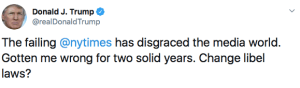
FEB. 26, 2020: Trump Sues NY Times
FEB. 28, 2020: Appeals Court Rules House Can’t Sue to Enforce McGahn’s Subpoena
MAR. 1, 2020: Republican Senators Subpoena Burisma Witness
MAR. 2, 2020: Former Nunes’ Aide Promoted to Top Intelligence Post at NSC
MAR. 2, 2020: Top Government Officials Issue Warning About Election Interference
MAR. 4, 2020: Senate Republicans Pursue Burisma
MAR. 5, 2020: Judge Says Barr’s ‘Lack of Candor’ and ‘Distortions’ of Mueller Report ‘Call Into Question’ the Credibility of the Justice Dept.’s Redactions
MAR. 6, 2020: Trump Sues CNN
Trump has just fulfilled another promise. On Feb. 26, his presidential campaign sued The New York Times. For years, he has been warning us.
On Feb. 26, 2016, then-presidential candidate Trump said:
“One of the things I’m going to do if I win… I’m going to open up our libel laws so when they write purposely negative and horrible and false articles, we can sue them and win lots of money. We’re going to open up those libel laws. So when The New York Times writes a hit piece which is a total disgrace or when The Washington Post… writes a hit piece, we can sue them and win money instead of having no chance of winning because they’re totally protected.”
On Mar. 30, 2017, Trump tweeted:
https://twitter.com/realDonaldTrump/status/847455180912181249
And during the public portion of a cabinet meeting on Jan. 10, 2018, Trump said:
“We are going to take a strong look at our country’s libel laws, so that when somebody says something that is false and defamatory about someone, that person will have meaningful recourse in our courts.”
At least one US Supreme Court justice now appears to agree with him.
How the Libel Laws Work
Libel and defamation actions arise under state laws, but the First Amendment limits their application. When Trump complains that the media are “totally protected” from such lawsuits, he’s wrong.
Trump is referring to the US Supreme Court’s 1964 landmark decision in New York Times v. Sullivan, which involved alleged defamation of a public official. The Court observed that America has “a profound national commitment to the principle that debate on public issues should be uninhibited, robust, and wide-open, and that it may well include vehement, caustic, and sometimes unpleasantly sharp attacks on government and public officials.”
The Court was concerned that “would-be critics of official conduct may be deterred from voicing their criticism, even though it is believed to be true and even though it is, in fact, true, because of doubt whether it can be proved in court or fear of the expense of having to do so,” the Court wrote. Such deterrence “dampens the vigor and limits the variety of public debate.”
To minimize the risk of self-censorship in political discourse, the Court ruled that a public official must prove “actual malice” — that is, the statement must have been made “with knowledge that it was false or with reckless disregard of whether it was false or not.” In 1967, the Court extended the rule to “public figures.” But that heightened standard of proof doesn’t apply to suits against ordinary individuals.
How Trump Works the Libel Laws
When it comes to defamation lawsuits, Trump is a seasoned litigant, but not a particularly successful one. In 1984, he sued an architecture critic and lost. In 2006, he sued Timothy O’Brien, author of TrumpNation: The Art of Being the Donald, because O’Brien’s book said that Trump’s net worth was between $150 million and $250 million, not billions as Trump claimed. Trump lost again. In 2013, Trump sued comedian Bill Maher over a joke — but then quickly withdrew the complaint.
On Jan. 4, 2018, Trump’s newest libel lawyer, Charles Harder, sent an 11-page cease-and-desist letter to the publisher of Michael Wolff’s forthcoming book, Fire and Fury: Inside the Trump White House. The publisher responded by moving up the book’s release date. Shortly after publication, it soared to the top of The New York Times best-seller list.
On Oct. 16, 2019, Harder sent a letter to CNN threatening suit over its allegedly biased coverage of Trump. Nothing came of that either.
Harder’s latest salvo is aimed at Max Frankel, executive editor of The New York Times from 1986 to 1994. The Trump campaign’s basic complaint about Frankel’s Mar. 27, 2019 opinion piece, “The Real Trump-Russia Quid Pro Quo,” is that there was no “deal” or “quid pro quo” between the campaign and Russia.
But Trump can’t possibly want people to read Mueller’s report, which concluded that his campaign knew about and welcomed Russia’s help. It can’t serve Trump’s interests to review anew the extensive evidence of contacts between his campaign and Russia throughout 2016. Trump can’t want the public to recall his efforts to obstruct the investigation into those contacts or Mueller’s refusal to exonerate him on those charges. Nor can it help Trump’s 2020 campaign to scrutinize his policies that have promoted Russian interests. He certainly doesn’t want the public poring over the Trump-Russia Timeline.
So what’s the agenda motivating the complaint that Harder filed on Feb. 26?
Justice Thomas Weighs In
The Times vows to fight the case, but the path to victory will require significant legal fees. That alone contributes to a chilling effect on free speech and a free press. The public never knows about self-imposed censorship resulting from media fear of a powerful libel bully.
But the stakes could be even greater. In February 2019, Justice Clarence Thomas wrote that the Court should reconsider the Sullivan standard because it had no basis in the Constitution.
“New York Times [v. Sullivan] and the court’s decisions extending it were policy-driven decisions masquerading as constitutional law,” Thomas said. No other justice joined him — for now.
I don’t know if Thomas has been listening to Trump’s public proclamations about libel law. But Thomas’s wife, Ginni, appears to have Trump’s ear on another important issue. According to The New York Times, “For the past 18 months, she and other conservatives have plied the White House with memos and suggestions about which people to fire — and who should replace them.”
One more thing: Perhaps it’s a coincidence, but on Mar. 2, 2020, one of Trump’s most loyal congressional allies, Rep. Devin Nunes (R-CA), sued The Washington Post for defamation too.
While Trump and Attorney General William Barr were intervening in the sentencing of Roger Stone and hollowing out the Department of Justice in various other ways, US intelligence officials were warning senior members of the House Intelligence Committee that Russia is, once again, interfering in a US presidential election to help Trump win. Among their efforts is supporting Sen. Bernie Sanders (I-VT) in the Democratic primary.
When Trump learned about the House briefing, was he outraged?
Yes, but not at Putin for yet another round of election interference. Trump was furious that an aide to Trump’s acting director of national intelligence (ODNI) Joseph Maguire had briefed Congress on Russia’s ongoing efforts to help Trump win re-election. Six days later, Trump fired Maguire and appointed a new acting ODNI — Richard Grenell. He’s a Trump loyalist who has no real intelligence experience at all.
But Grenell has an important qualification that Trump values more highly than competence: Grenell still expresses skepticism about Russian interference in 2016. Now he heads an entire US intelligence apparatus that — based on facts and evidence — disagrees with him.
Trump also replaced Maguire’s deputy. Grenell’s new senior adviser is Kash Patel — formerly a close aide to Rep. Devin Nunes. Patel and Nunes worked together in an effort to discredit special counsel Robert Mueller’s investigation.
Go to the Timeline, click on Nunes’ name, and take a look at the July 2017 entry featuring Patel. Here’s the first sentence:
“Seeking to contact Christopher Steele, two members of the House Intelligence Committee staff — one of whom is Kashyap Patel — visit the offices of Steele’s lawyers.”
By the way, Nunes — the ranking Republican member of the House Intelligence Committee — was the person who told Trump about the classified briefing on Feb. 13, 2020.
At the Justice Department and throughout the US intelligence community, Trump is placing people in high places who will do his bidding and tell him only what he wants to hear. As Trump continues his war on the truth, he is protecting his friends and attacking his enemies. If you’re not alarmed by what is happening, then you’re not paying attention.
Here is a list of the latest updates to the Trump-Russia Timeline at Dan Rather’s News & Guts and Just Security:
REVISED: AUG. 16, 2017: Rohrabacher Echoes Assange: Russia Didn’t Hack Election; Assange’s Attorney Later Claims Rohrabacher Offered Pardon from Trump
DEC. 10, 2019: Trump Announces New US Attorney for DC
JAN. 17, 2020: Deputy Attorney General Sends Internal Notice: All Ukraine-related Investigations Will Be Supervised by US Attorney for Eastern District of New York
FEB. 9-10, 2020: Flynn Sentencing Postponed Again
FEB. 10-11, 2020: Prosecutors Seek Seven- to Nine-Year Sentence for Stone; Trump Tweets That It’s ‘Excessive’; DOJ Retreats; Stone’s Prosecutors Resign
FEB. 11-13, 2020: Trump Withdraws Liu’s Nomination and She Resigns
FEB. 11, 2020: Senate Republicans Block Election Security Bills Again
FEB. 11, 2020: Spicer and Priebus Return to White House
FEB. 12, 2020: Trump Praises Barr for ‘Taking Charge’ of Stone Case
FEB. 13, 2020: Hicks to Return as Kushner Aide
FEB. 13, 2020: Barr Criticizes Trump’s Tweets
FEB. 13, 2020: Trump Admits Sending Giuliani to Ukraine for Damaging Information on Political Opponents
FEB. 13, 2020: Trump Attacks Foreperson on Stone Jury
FEB. 13-20, 2020: Aide to Acting DNI Maguire Gives Briefing to Congress on Election Security; Trump is Furious, Replaces Maguire with Loyalist Grenell; Another High-Ranking ODNI Official Departs
FEB. 14, 2020: Barr Assigns Outside Prosecutors to Review Flynn and Other ‘Politically Sensitive National-Security Cases’ in DC Office
FEB. 14, 2020: DOJ Says It Won’t Pursue Charges Against McCabe; Transcript of Sept. 2019 Hearing Released, Reveals Judge Blasted Trump
FEB. 14, 2020: Stone Asks for New Trial
FEB. 18, 2020: Trump Issues Pardons and Commutations, Incorrectly Blames Comey for Blagojevich’s Conviction
FEB. 19, 2020: Rood Resigns
FEB. 20, 2020: Stone Sentenced to 40 Months in Prison
FEB. 21, 2020: Trump Tries to Block Bolton’s Book
This post first appeared at Dan Rather’s News & Guts on Feb. 16, 2020.
Back in 2017, Roger Stone lied to the House Intelligence Committee. Then he threatened a witness who was going to expose him. A jury deliberated for slightly more than seven hours before convicting him on all seven counts of lying to Congress and witness tampering.
On Feb. 10, career prosecutors recommended a prison sentence of seven to nine years. As Trump tried publicly to get him a lighter one, Attorney General William Barr was working behind the scenes to help. Former Attorney General Eric Holder called Barr’s direct intervention “unprecedented, wrong and ultimately dangerous.”
Why is Trump so concerned about Roger Stone and what is Barr’s role in the growing scandal?
The Facts
Aug. 6, 2015: The Trump campaign says it fired Stone, although Stone claims he quit. Either way, Stone remains a prominent Trump surrogate, maintaining regular contact with Trump and the campaign through the November 2016 election.
June 14, 2016: On the day that the DNC announces that its computer system has been hacked, Stone calls Trump.
July 18 or 19: Trump’s attorney Michael Cohen is in Trump’s office when Stone calls, according to Cohen’s later congressional testimony. Over Trump’s speakerphone, Stone tells Trump that he has just spoken by phone with WikiLeaks’ founder Julian Assange, who lives in the Ecuadorian embassy in London. Stone says to expect within a couple of days “a massive dump of emails that would damage Hillary Clinton’s campaign.” According to Cohen, Trump responds “to the effect of ‘wouldn’t that be great.’”
July 22: As the Democratic Convention begins, WikiLeaks releases close to 20,000 emails sent to or received by several top Democratic Party officials.
On or shortly after July 22, 2016: Paul Manafort directs his deputy, Rick Gates, to contact Stone for information about any additional releases and other damaging information WikiLeaks has regarding the Clinton campaign.
Late July 2016: During a ride with Trump to LaGuardia Airport, Gates and two secret service agents are in the car when Stone calls Trump on the phone. After Trump hangs up, he tells Gates that more releases of damaging information would be coming. By late summer, the Trump campaign is planning a press strategy, a communications campaign, and political messaging based on WikiLeaks’ possible release of Clinton emails.
July 31: Stone calls Trump and they speak for ten minutes.
Aug. 2: Stone emails Manafort about the “word” coming from the “friend” in the embassy (Assange).
Aug. 3: Stone emails Manafort that he has an idea “to save Trump’s ass” and asks Manafort to call him.
Aug. 16: Stone emails Steve Bannon, who is about to be named the Trump campaign’s CEO. “Trump can still win — but time is running out,” Stone says, adding that he knows how to “win” this, but “it ain’t pretty.”
Sept. 21: On The Joe Piscopo Show, a local New York City radio program, Stone says that he spoke with Trump late the prior evening around 1:00 or 1:30 am.
Oct. 3: Stone messages Erik Prince, who is acting as an outside adviser to the Trump campaign. “Spoke to my friend in London last night,” Stone says, and a “payload” is coming.
Oct. 7: In a joint statement, the Department of Homeland Security and the Director of National Intelligence say that the US Intelligence Community is confident that the Russian government directed the hacking of both Clinton campaign and DNC emails.
Meanwhile, according to Jerome Corsi, Stone calls him on the morning on Oct. 7, claiming to have advance knowledge about the “Access Hollywood” tapes containing Trump’s vulgar comments about women. Stone says, “If you have any way to get to Assange to start dropping, tell him to start dumping.”
At 3:30 pm (ET) — 30 minutes after the release of the intelligence community’s warning about Russian election interference — the “Access Hollywood” tapes become public. At 4:30 pm (ET), WikiLeaks begins publishing stolen emails from the account of Hillary Clinton’s campaign chairman, John Podesta.
Shortly after WikiLeaks’s release of the emails, an associate of Steve Bannon sends a text message to Stone that reads “well done.” In subsequent conversations with senior Trump campaign officials, Stone claims credit for having correctly predicted the October 7, 2016 release, according to his later indictment.
Nov. 2: Stone says he talks to Trump about once a week, on average, according to The Guardian.
The Lies
Nov. 20, 2018: In sworn answers to special counsel Robert Mueller’s written questions, Trump says that he has no recollection of discussing WikiLeaks with Roger Stone between June 1, 2016 and Nov. 8, 2016. (Mueller Rep. Vol. II, App. pp. C-18-19)
Jan. 31, 2019: During an interview with The New York Times, reporter Maggie Haberman asks Trump, “Did you ever talk to him [Stone] about WikiLeaks? Because that seemed —“
Trump: “No.”
Haberman: “You never had conversations with him.”
Trump: “No, I didn’t. I never did.”
Haberman: “Did you ever tell him to — or other people to get in touch with them?”
Trump: “Never did.”
The Fix
Dec. 10, 2019: Trump announces plans to nominate US Attorney for the District of Columbia Jesse Liu to become the Treasury Department’s undersecretary for terrorism and financial crimes. As the US attorney in DC, Liu had been managing several of special counsel Robert Mueller’s prosecutions and referrals, including those involving Mike Flynn, Roger Stone, and Rick Gates.
Jan. 30, 2020: Attorney General William Barr names Timothy Shea, one of his closest advisers, to replace Liu as interim US attorney for the District of Columbia.
Awaiting Senate confirmation of her new post, Liu becomes a senior counsel to Treasury Secretary Steven Mnuchin.
Feb. 10-11: Based on federal sentencing guidelines, career prosecutors in Shea’s office handling Stone’s case recommend a prison sentence of seven to nine years. Trump protests:
https://twitter.com/realDonaldTrump/status/1227122206783811585
Hours later, the Justice Department says that its recommendation is “extreme” and “excessive” and that a new memorandum will outline its revised position. Shortly thereafter, the four federal attorneys who signed the original sentencing memorandum resign from the case. Jonathan Kravis — one of Stone’s prosecutors at trial — resigns from the Justice Department altogether.
As the day ends, Shea and Assistant US Attorney John Crabb Jr., who is newly assigned to the Stone case, file a revised memorandum acknowledging that the sentencing guideline factors set forth in the original memo were “perhaps technically applicable.” But the memo asserts that the previously proposed sentence of 87 to 108 months “could be considered excessive and unwarranted.”
The same day, Trump withdraws Liu’s nomination for the Treasury Department position and on Feb. 13, she resigns.
Feb. 12: Trump congratulates Barr for “taking charge” of the Stone case, “which perhaps should not even been brought”:
https://twitter.com/realDonaldTrump/status/1227561237782855680
Feb. 13: After Barr lets Trump know some of what he plans to say, Barr tells ABC News that Trump’s tweets “make it impossible for me to do my job…”
America is getting a first-hand look at what Barr thinks his job is. In the Stone case, Trump’s tweets outed him. Autocrats can punish their enemies and reward their friends. With the help of savvy accomplices, the rule of law can die at their hands — before our very eyes.
Americans have seen this movie before. Trump hollowed out the Justice Department until he finally found his Roy Cohn in Attorney General William Barr. Now it’s on to the Departments of State and Defense.
DOJ
On Feb. 10, distinguished federal career prosecutors recommended a seven- to nine-year prison sentence for Roger Stone, who was convicted of lying to Congress and witness tampering.
Then in the middle of the night, Trump tweeted that the recommendation was “horrendous,” “unfair,” and a “miscarriage of justice.” As dawn broke over the nation’s capital, the DOJ was calling the recommendation “extreme and excessive and disproportionate to Stone’s offenses.” By the end of the day, all four prosecutors who had signed the original sentencing memorandum had withdrawn from the case. One had left the government altogether.
A new memo signed by the interim US attorney for the District of Columbia, Barr’s close adviser Timothy Shea, recanted the earlier recommendation and underlying analysis, saying that the originally proposed sentence “could be considered excessive and unwarranted….”
(In an upcoming post, I’ll have more on the intrigue surrounding Shea’s recent appointment to replace DC’s former US Attorney, Jesse Liu. It’s not pretty.)
Trump then congratulated Barr for “taking charge” of the case, “which perhaps should not even been brought.”
State and Defense Department Witnesses
Trump is also retaliating against State and Defense Department witnesses whose only sin was to defy his edict commanding silence in the face of congressional subpoenas. They testified about Trump’s wrongdoing. And they did it under oath — something Trump has yet to do.
It’s going to get worse. The cure won’t arrive until November.
JAN. 31, 2020: Senate Votes Against Calling Trial Witnesses
JAN. 31, 2020: DOJ Admits It Has Documents Relating Trump Role in Withholding US Aid to Ukraine
JAN. 31, 2020: Yovanovitch Retiring
FEB. 4, 2020: DOJ Finally Says It Will Refer Request to Investigate Prince for Review
FEB. 4, 2020: Giuliani Is Still Seeking Information on the Bidens
FEB. 5, 2020: Wray Testifies That Russians Continue to Engage in Malign Influence
FEB. 5, 2020: Trump Acquitted
FEB. 5, 2020: Sens. Grassley and Johnson Request Hunter Biden Records
FEB. 5, 2020: Barr Issues New Rules on Presidential Investigations
FEB. 7, 2020: Trump Fires Vindman and Sondland
FEB. 9-10, 2020: Giuliani’s Ukraine Info on Biden Going to Barr
Retaliation against a witness in an official proceeding is a federal crime.
Twelve witnesses testified publicly at the House impeachment hearings. Republicans had selected three of them. Nine other witnesses defied Trump’s edict to remain silent and stepped forward. At great personal and professional risk to themselves and their families, they provided consistent, undisputed, and damning testimony.
Where are they now?
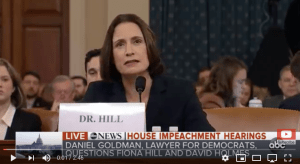
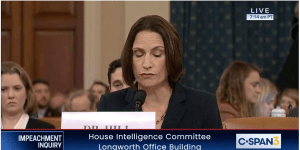
#1: Fiona Hill, former deputy assistant to the President and senior director for European and Russian affairs on the National Security Council, testified that she became alarmed about US Ambassador to the EU Gordon Sondland’s “domestic political errand” for Trump. He was brokering a deal whereby Trump would meet with newly elected Ukrainian President Volodymyr Zelensky only if Zelensky announced an investigation into the Bidens and pursued the false Russian narrative that Ukraine had interfered in the 2016 US presidential election.
https://www.youtube.com/watch?v=9bCz0uIH1Fs
When Sondland described the quid pro quo to Hill and her boss, national security adviser John Bolton, Bolton ordered her to report the conversation to the deputy White House counsel: “You tell [John] Eisenberg that I am not part of whatever drug deal that Sondland and [acting chief of staff Mick] Mulvaney are cooking up.”
https://www.youtube.com/watch?v=_XYErGj-Rcw
By the time Hill testified on Nov. 21, she had already resigned, effective July 19 — a few days before Trump’s infamous July 25 phone call with President Zelensky. She’s now a senior fellow at the Brookings Institution.
#2: Marie Yovanovitch testified that while serving as US Ambassador to Ukraine, she was the victim of Rudy Giuliani’s smear campaign that led to her being recalled from that post in April 2019. In his July 25 call, Trump said Yovanovitch was “going to go through some things.” During her public congressional appearance, Trump smeared her again. On Jan. 31, 2020, Yovanovitch retired from the foreign service.
#3: William B. Taylor Jr. replaced Yovanovitch as acting US Ambassador to Ukraine. He testified to extensive communications with Sondland and others about Trump’s evolving demands on President Zelensky. At first, Trump withheld a White House meeting unless and until Zelensky announced investigations into the Bidens and the 2016 US presidential election. Then Trump added to his leverage by withholding essential US military aid. Taylor called the scheme “crazy.” On Jan. 1, 2020, he was recalled from his post ahead of schedule.
#4: Jennifer Williams was a foreign service officer and aide to Vice President Mike Pence. She testified to numerous interactions between Pence and Ukrainian officials during the months when Trump was demanding a quid pro quo. She was also present for the July 25 phone call, which she found “unusual” because it focused on Trump’s personal political agenda. On Jan. 30, 2020, Williams requested reassignment to the Defense Department.
#5: Lt. Col. Alexander Vindman, a career military officer and National Security Council member, testified that he was so alarmed about Trump’s July 25 call with President Zelensky that he went to his twin brother Yevgeny — also a career military officer and an ethics lawyer for the NSC. Together they immediately reported the call to deputy White House counsel John Eisenberg, who buried the transcript in a server reserved for the government’s most sensitive secrets. During his congressional appearance, the White House used its official Twitter account to attack Vindman.
On Feb. 7, 2020, two days after the Senate acquitted Trump, he relieved Vindman and his twin brother of their NSC duties. To emphasize the point, Trump accused Alexnder Vindman of insubordination for telling the truth, and security escorted him out of his office at the Eisenhower Executive Office Building.
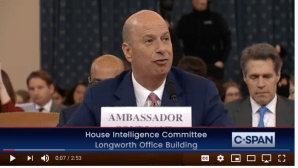
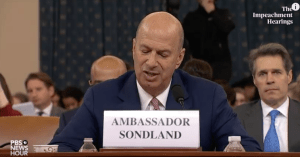
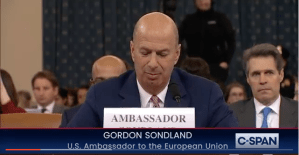
#6: Gordon Sondland was a million-dollar donor to Trump’s inauguration festivities. Trump rewarded him with an ambassadorship to the EU. But at the House hearings, Sondland testified, “Was there a quid pro quo? …The answer is yes…. Everyone was in the loop.”
https://www.youtube.com/watch?v=-7ZBJZRJu9g
So on Feb. 7, 2020, Trump fired him, too.
Still Standing — For Now
#7: Laura Cooper testified that Ukrainian officials knew about an issue with US aid to that country as early as July 25 — the date of Trump’s call. She remains deputy assistant secretary of defense for Russia, Ukraine, and Eurasia.
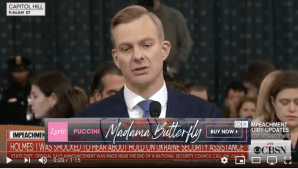
#8: David Holmes is still an official at the US embassy in Kiev. He testified to a telephone conversation between Sondland and Trump that occurred the day after Trump’s July 25 call with President Zelensky. Holmes overheard Trump asking Sondland, “Is he [Zelensky] going to do the investigation?” Sondland replied, “He’s gonna to do it. President Zelensky will do anything you ask him to do.”
https://www.youtube.com/watch?v=yfIBD5tg8zs
#9: George Kent praised Vindman and said that Yovanovitch had been the victim of Giuliani’s “campaign of lies.” He remains deputy assistant secretary of state for European and Asian Affairs.
Above the Law
Within hours of Trump’s acquittal on Feb. 5, the White House issued a statement attacking Rep. Adam Schiff (D-CA) and Speaker Nancy Pelosi (D-CA), saying, “Will there be no retribution?”
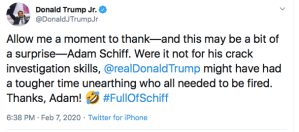
On Feb. 7 — the same day that President Trump fired the Vindmans and Sondland — Don Jr. tweeted:
https://twitter.com/DonaldJTrumpJr/status/1225941861765918720
The chilling effect is clear. But as profiles in courage emerge, their legacies endure.
On Feb. 3, Bill Moyers and I discussed Trump’s impeachment. You can read the transcript here:
All Democrats in the Senate voted to see documents and hear witnesses that Trump had blocked from the House impeachment inquiry. Only two Republicans, Sens. Mitt Romney (R-UT) and Susan Collins (R-ME), voted with them. The public has to wait for publication of former national security adviser John Bolton’s book to hear his story.
But damning excerpts have already leaked out. They reveal that Trump told Bolton about the quid pro quo: Trump would not release congressionally appropriated aid to Ukraine until it opened investigations into former Vice President Joseph Biden and Ukrainian interference in the 2016 US presidential campaign.
Except for Romney and Collins, Republican senators didn’t care. And Prof. Alan Dershowitz was reinforcing that view. Even if Trump did everything that Bolton and House managers had accused him of doing, it wasn’t impeachable, Dershowitz claimed. Among constitutional law scholars, he seems to be alone in that view. Even the GOP’s constitutional law expert at the House Judiciary Committee hearing on the articles of impeachment, Jonathan Turley, disagreed.
Hours after the Senate vote and pursuant to a prior court deadline, the Justice Department released redacted versions of documents showing that Trump was involved in withholding aid to Ukraine as early as June 24, 2019. Evidence will continue top seep out. None of it will be favorable to Trump. Otherwise, the public would have seen it long ago.
On Feb. 5, the Senate is poised to acquit him, but he will never be exonerated.
APR. 20, 2018: Parnas Dines with Trump and Select Donors
APR. 30, 2018: Trump Tells Parnas to ‘Take Out’ Yovanovitch
DEC. 9, 2019: Wray Says No Evidence of Ukraine Interference in 2016 Election
DEC. 30, 2019: Bolton Sends Manuscript of Book to White House for National Security Review
JAN. 21-22, 2020: Trump’s Impeachment Trial Continues with Debate on Motions
JAN. 22-24, 2020: Democrats Present Case Against Trump
JAN. 22, 2020: Trump: ‘We Have All the Material, They Don’t Have the Material’
JAN. 23-24, 2020: White House Tries to Block Portions of Bolton’s Book; Bolton’s Attorney Pushes Back
JAN. 25, 2020: Trump Legal Team Begins Presentation to Senate
JAN. 26, 2020: NYT Reports Excerpts from Bolton’s Book
JAN. 26, 2020: Treasury Dept. Lifts Sanctions on Deripaska’s Companies
JAN. 27-28, 2020: Trump Defense Continues and Concludes
JAN. 29, 2020: DOJ Now Willing to Accept Probation for Flynn
JAN. 30, 2020: Barr Replaces US Attorney for DC
JAN. 31, 2020: Senate Votes Against Calling Trial Witnesses
JAN. 31, 2020: DOJ Admits It Has Documents Relating Trump Role in Withholding US Aid to Ukraine
Another day brings another incriminating revelation from former national security adviser John Bolton’s forthcoming book. Each new disclosure puts an increasingly harsh spotlight on White House counsel Pat Cipollone — co-leader of Trump’s Senate trial defense team.
The Bolton Saga Continues
Nov. 9, 2019: CNN reports that Bolton has written a book about his time in the Trump White House. Publication would occur before the November 2020 election.
Nov. 21: One of Bolton’s top deputies and former member of the National Security Council, Fiona Hill, testifies publicly about a July 10 meeting with Bolton, NSC member Alexander Vindman, US Ambassador to the EU Gordon Sondland, and others. In that meeting, Sondland described what Hill calls Trump’s “political errand.”
It was a quid pro quo: Trump would not release congressionally appropriated aid to Ukraine until it opened investigations into former Vice President Joseph Biden and Ukrainian interference in the 2016 US presidential campaign. Immediately thereafter, Bolton directed Hill to inform the deputy White House counsel (who is also the NSC’s top lawyer) about Sondland’s statement.
“Tell John Eisenberg that I’m not part of whatever drug deal Mulvaney and Sondland are cooking up,” Bolton told Hill.
https://www.youtube.com/watch?v=_XYErGj-Rcw
Dec. 30: Bolton’s attorney sends a manuscript of Bolton’s book to the NSC for prepublication security review. The manuscript reveals Bolton’s first-hand account of the quid pro quo.
It also describes an Oval Office meeting in early May that includes Bolton, Cipollone, acting chief of staff Mick Mulvaney, and Rudy Giuliani. According to Bolton, Trump told him to call newly elected Ukrainian President Volodymyr Zelensky to make sure that Zelensky would meet with Giuliani, who was planning a trip to Ukraine to discuss the investigations Trump sought. Bolton never made the call. (After The New York Times later reported Bolton’s description of the meeting, Trump and Giuliani denied that it occurred.)
Jan. 6, 2020: Bolton announces his willingness to testify in the Senate impeachment trial.
Jan. 23-24: The White House tries to block publication of Bolton’s book. In a letter to Bolton’s attorney, an NSC official writes that the manuscript cannot be published until supposedly classified information is deleted.
Bolton’s attorney responds in an email that Bolton may be called to testify at the Senate trial about information in the chapter of his manuscript dealing with Ukraine. Bolton’s attorney says that he does not believe it includes any information that “could reasonably be considered classified,” but asks the NSC to turn over the results of its review of that chapter as soon as possible.
Jan. 25: Under the leadership of Pat Cipollone and Jay Sekulow, Trump’s defense team argues that there is no first-hand evidence of the quid pro quo. Cipollone’s deputy White House counsel Mike Purpura asserts, “Not a single witness testified that the president himself said that there was any connection between any investigations and security assistance, a presidential meeting, or anything else.”
Jan. 26: The New York Times reports that the manuscript of Bolton’s book reveals his first-hand knowledge of Trump’s quid pro quo.
Jan. 27: The Washington Post reports, “Cipollone has privately insisted to senators and allies that the White House did not know Bolton was going to make such an accusation in the book.”
Jan. 29: The New York Times reports, “The White House has acknowledged that National Security Council staff members reviewed the draft [of Bolton’s manuscript], and that they briefed the White House counsel, Pat A. Cipollone.”
But on the Senate floor that evening, Patrick Philbin, another deputy White House counsel, stumbled in response to a direct question on the timing of the White House’s knowledge of Bolton’s explosive claims:
“At some point… the manuscript had been submitted to the NSC… White House counsel was notified that it was there.” Then he said, “The NSC has released a statement explaining that it has not been reviewed by anyone outside NSC staff.”
https://www.youtube.com/watch?v=LsZsP2jQ6d0
Note Philbin’s use of the passive voice — “the White House counsel was notified” — but he doesn’t say by or to whom, or when. Then Philbin slides into reliance on the NSC statement that only NSC staff has “reviewed” it.
With respect to the explosive passages where Trump told Bolton that he would not release US aid until Ukraine gave him the investigations he wanted, Philbin went on to say, “No one from inside the White House or outside the White House told us publication of the book would be problematic for the president. We assumed Mr. Bolton was disgruntled and wouldn’t be saying a lot of nice things about the president, but no one told us anything like that.”
Trump’s Legal Team: Incompetent or Dishonest?
Long before his book arrived at the NSC, Bolton instructed Fiona Hill to notify deputy White House counsel John Eisenberg that he knew and disapproved of Trump’s Ukraine quid pro quo plan — and she did. Two weeks later, Trump made his infamous July 25 call to President Zelensky and Eisenberg put the transcript in a super-secret server.
By the time Cipollone and his team were addressing the Senate and Chief Justice John Roberts six months later, the White House’s NSC had been in possession of Bolton’s manuscript for almost a month. If Eisenberg didn’t inform his boss about the manuscript’s bombshell contents before the trial began, and if his boss didn’t ask about them, they’re both incompetent. If Eisenberg did tell his boss what was in Bolton’s book, his boss is dishonest.
His boss is Pat Cipollone.
[This is an updated version of a post that first appeared at Dan Rather’s News & Guts early on Jan. 25, 2020. This update takes into account additional distortions, distractions, and diversions that Trump’s lawyers made during the impeachment trial later that morning. If you read the original post, you can skip down to the section that begins: “It Got Worse.”]
Never lie to a judge or jury. Every trial lawyer knows that cardinal rule of advocacy. But in their arguments on Jan. 21, Trump’s lawyers violated it. Repeatedly. With the Chief Justice of the United States Supreme Court presiding and the entire US Senate sitting as judge and jury.
It was only the beginning.
Sekulow
Trump’s personal attorney Jay Sekulow led off.
Lie #1:The House did not afford Trump “due process”: “During the proceedings that took place before the Judiciary Committee, the president was denied the right to cross-examine witnesses, the president was denied the right to access evidence, and the president was denied the right to have counsel present at hearings.”
Truth: House Judiciary Committee Chairman Jerrold Nadler (D-NY) invited Trump to participate in the hearings, even though he had no “due process” obligation to do so. White House counsel Pat Cipollone rejected the invitation in a lengthy screed that concluded, “[W]e do not intend to participate….”
Lie #2: The Mueller report found no collusion and no obstruction: “It came up empty on the issue of collusion with Russia. There was no obstruction. In fact, the Mueller report — to the contrary of what these managers say today — came to the exact opposite conclusions of what they say.”
Truth: Mueller’s charge was limited to investigating crimes, so he expressly excluded any determination about “collusion” because it’s not a legal term. Mueller did find:
As for obstruction, Mueller expressly refused to exonerate Trump, even though Justice Department policy precluded him from indicting a sitting president. But he described 10 episodes of Trump’s possible obstruction and, for many of them, concluded that the evidence was sufficient to prove it.
Cipollone
White House counsel Pat Cipollone is paid by American taxpayers to represent the office of the president, not Trump personally. He and Trump have crossed the line separating those two jobs.
Lie #3: Continuing Sekulow’s theme that Trump did not receive “due process,” Cipollone asserted that Republican members of the House Intelligence Committee were not allowed entry into the secure room where private hearings occurred: “The proceedings took place in a basement of the House of Representatives. … Not even [House intelligence Committee Chairman Adam] Schiff’s Republican colleagues were allowed into the SCIF.”
Truth: Forty-eight Republican members of three House committees — including the Intelligence Committee — were permitted to attend the hearings in the SCIF. Subsequently released transcripts prove that many of those Republicans even questioned witnesses.
Lie #4: US aid to Ukraine was delivered “on time.”
Truth: Congress’ nonpartisan watchdog, the Government Accountability Office, concluded that Trump’s aid freeze broke a law — the Impoundment Control Act.
Trump did not lift the freeze in time to disburse all of it as required by the end of the fiscal year on Sept. 30, requiring Congress to pass an extension of the deadline. “Had that provision not been included, then any unobligated funds as of September 30th would have expired,” according to OMB official Mark Sandy.
This list is not exhaustive. And it’s growing.
It Got Worse
Outside the Senate chamber on Jan. 22, Sekulow said, “Adam Schiff today talked about quid pro quo. Notice what’s not in the articles of impeachment: allegations or accusations of quid pro quo. That’s because they didn’t exist.” The White House then tweeted a video clip of Sekulow’s nonsense.
CNN’s Jake Tapper was among many who called him out: “That’s Jay Sekulow falsely stating in the articles of impeachment there are no allegations or accusations of quid pro quo.” Tapper continued, “It’s true that the words quid pro quo, ‘this for that,’ do not appear in the articles of impeachment. But they certainly do describe this for that.” Tapper then read from the portion of impeachment article one outlining Trump’s quid pro quoand said, “I am not a lawyer. But does that not describe a quid pro quoto the letter?”
Here’s the clip: https://www.cnn.com/videos/politics/2020/01/22/sekulow-quid-pro-quo-imopeachment-fact-check-tapper-vpx.cnn/video/playlists/trump-ukraine/
I am a lawyer and yes, Jake, it definitely does. But when Trump’s legal team opened its presentation on Saturday, Jan. 25, deputy White House counsel Mike Purpura spun a new “no quid pro quo” deception: There was no quid pro quo because “a presidential meeting took place on September 25 [at the United Nations] without the Ukrainian government announcing any investigations.”
CNN fact-checked that claim and found it misleading: “While an announcement of investigations never took place, it was planned and discussed between representatives of both the US and Ukraine. The plan was only halted after the withheld aid was released.” [Emphasis in original]
Even more to the point, after public testimony from other witnesses prompted US Ambassador to the EU Gordon Sondland to revise his earlier private testimony for the second time, he declared, “Was there a quid pro quo?… The answer is yes.”
Likewise, Trump’s chief of staff Mick Mulvaney admitted it publicly: “We do that all the time… Get over it.”
It’s no mystery why Trump blocked Mulvaney from testifying before the House and why Republicans in the Senate don’t want the world to hear him under oath during the trial.
What’s Next?
Trump’s legal team can continue infecting the proceedings and the body politic with whatever narrative they choose, regardless of its veracity. Among them is Russian propaganda that Ukraine interfered in the 2016 US presidential election. Sekulow repeated that baseless conspiracy theory, despite the statement of Trump’s own FBI Director Chris Wray, who said last month that “we have no information that indicates that Ukraine interfered with the 2016 presidential election.”
Media outlets including CNN and AP are fact-checking claims. So is the House Intelligence Committee, which performed the herculean task in real time on Twitter. If you’re on Twitter, follow that feed: https://twitter.com/i/events/1221120833764188160
But unless the Senate votes to call witnesses — as 70 percent of Americans favor — the House impeachment team won’t have an opportunity to respond in a way that would reach far more of the general public. And once spoken, a lie takes on a life of its own. As Jonathan Swift wrote more than two hundred years ago, “Falsehood flies, and the truth comes limping after it.”
Sometimes the purpose of a lie isn’t to get people to believe it. It’s to get people to doubt everything — including the truth.
This post first appeared as “Trump’s Lyin’ Lawyers” on Dan Rather’s News & Guts on Jan. 25, 2020.
Never lie to a judge or jury. Every trial lawyer knows that cardinal rule of advocacy. But in their arguments on Jan. 21, Trump’s lawyers violated it. Repeatedly. With the Chief Justice of the United States Supreme Court presiding and the entire US Senate sitting as judge and jury.
It was only the beginning.
Sekulow
Trump’s personal attorney Jay Sekulow led off.
Lie #1: The House did not afford Trump “due process”: “During the proceedings that took place before the Judiciary Committee, the president was denied the right to cross-examine witnesses, the president was denied the right to access evidence, and the president was denied the right to have counsel present at hearings.”
Truth: House Judiciary Committee Chairman Jerrold Nadler (D-NY) invited Trump to participate in the hearings, even though he had no “due process” obligation to do so. White House counsel Pat Cipollone rejected the invitation in a lengthy screed that concluded, “[W]e do not intend to participate….”
Lie #2: The Mueller report found no collusion and no obstruction: “It came up empty on the issue of collusion with Russia. There was no obstruction. In fact, the Mueller report — to the contrary of what these managers say today — came to the exact opposite conclusions of what they say.”
Truth: Mueller’s charge was limited to investigating crimes, so he expressly excluded any determination about “collusion” because it’s not a legal term. Mueller did find:
As for obstruction, Mueller expressly refused to exonerate Trump, even though Justice Department policy precluded him from indicting a sitting president. But he described 10 episodes of Trump’s possible obstruction and, for many of them, concluded that the evidence was sufficient to prove it.
Cipollone
White House counsel Pat Cipollone is paid by American taxpayers to represent the office of the president, not Trump personally. He and Trump have crossed the line separating those two jobs.
Lie #3: Continuing Sekulow’s theme that Trump did not receive “due process,” Cipollone asserted that Republican members of the House Intelligence Committee were not allowed entry into the secure room where private hearings occurred: “The proceedings took place in a basement of the House of Representatives. … Not even [House intelligence Committee Chairman Adam] Schiff’s Republican colleagues were allowed into the SCIF.”
Truth: Forty-eight Republican members of three House committees — including the Intelligence Committee — were permitted to attend the hearings in the SCIF. Subsequently released transcripts prove that many of those Republicans even questioned witnesses.
Lie #4: US aid to Ukraine was delivered “on time.”
Truth: Congress’ nonpartisan watchdog, the Government Accountability Office, concluded that Trump’s aid freeze broke a law — the Impoundment Control Act. Trump did not lift the freeze in time to disburse all of it as required by the end of the fiscal year on Sept. 30, requiring Congress to pass an extension of the deadline. “Had that provision not been included, then any unobligated funds as of September 30th would have expired,” according to OMB official Mark Sandy.
This list is not exhaustive.
It Will Get Worse
Outside the Senate chamber on Jan. 22, Sekulow said, “Adam Schiff today talked about quid pro quo. Notice what’s not in the articles of impeachment: allegations or accusations of quid pro quo. That’s because they didn’t exist.” The White House then tweeted a video clip of Sekulow’s nonsense.
CNN’s Jake Tapper was among many who called him out: “That’s Jay Sekulow falsely stating in the articles of impeachment there are no allegations or accusations of quid pro quo.” Tapper continued, “It’s true that the words quid pro quo, ‘this for that,’ do not appear in the articles of impeachment. But they certainly do describe this for that.” Tapper then read from the portion of impeachment article one outlining Trump’s quid pro quoand said, “I am not a lawyer. But does that not describe a quid pro quoto the letter?”
I am a lawyer and yes, Jake, it definitely does.
Trump’s legal team now has an opportunity to infect the proceedings and the body politic with whatever narrative they choose, regardless of its veracity. Unless the Senate votes to call witnesses — as 70 percent of Americans favor — the House impeachment team won’t have an opportunity to respond.
Sometimes the purpose of a lie isn’t to get people to believe it. It’s to get people to doubt everything — including the truth.
The Trump-Russia Timeline is a compilation of what the public knows. The continuing revelations prompt an obvious question: What else is out there?
Next week, senators will vote on whether to allow witness testimony during the impeachment trial. The latest polls show that a vast majority of Americans — 66 to 80 percent — favor it.
All Democratic senators favor allowing witness testimony, which has occurred in every prior impeachment. Do Republican senators want to learn the truth now or later? That’s the only question because, make no mistake, eventually the truth will come out. All of it.
When it does, Republicans who opposed witness testimony at Trump’s trial will have to explain to their constituents why their willful ignorance in the short run somehow served the country’s best interests in the long run.
And the short run could be very short indeed.
Here is a list of the latest updates to the Trump-Russia Timeline at Dan Rather’s News & Guts and Just Security:
FEB. 10, 2019: Toensing and Giuliani Exchange Texts Regarding Yovanovitch’s Firing
FEB. 17, 2019: Toensing Presses for Information on Yovanovitch’s Status
MARCH 23-29, 2019: Text Messages Suggest Yovanovitch is Under Surveillance in Kiev, But Parnas Later Says She Wasn’t
MAR. 29, 2019: Nunes’ Aide in Contact with Parnas
APR. 12-19, 2019: Parnas Sets Up Interviews with Nunes’ Aide
APR. 23, 2019: Giuliani Texts Parnas About Yovanovitch
MAY 7, 2019: Parnas, Giuliani, and Others Meet Privately
MAY 10-11, 2019: Giuliani Seeks Meeting With Zelensky, Gets Rebuffed
MAY 12, 2019: Parnas Tells Ukrainian Officials That US Will Halt All Aid and Pence Won’t Attend Inauguration Unless They Investigate the Bidens
JULY 3, 2019: Parnas Tells Giuliani: ‘Going to Vienna’
EARLY NOVEMBER 2019: Russians Hack Burisma
NOV. 8, 2019: Trump Considers Accepting Putin Invitation to ‘Victory Parade’
JAN. 3, 2020: Trump Withholds More Emails
JAN. 6, 2020: Bolton Says He’ll Testify in Senate Trial
JAN. 7, 2020: Prosecutors Seek Prison Time for Flynn
JAN. 10, 2020: Trump Says He’ll Try to Block Bolton Testimony
JAN. 13, 2020: Barr Requires That He Approve FBI Counterintelligence Investigations Into Political Campaigns
JAN. 14, 2020: Flynn Moves to Withdraw Guilty Plea
JAN. 15, 2020: House Votes to Send Articles of Impeachment to Senate
JAN. 15-16, 2020: Parnas Speaks Publicly, Implicates Trump, Pence, Pompeo, Bolton, and Barr
JAN. 16, 2020: GAO Finds OMB Broke the Law by Withholding Aid
JAN. 16, 2020: Ukraine Opens Investigation into Russian Hack of Burisma
JAN. 16, 2020: Ukraine Opens Investigation into Possible Surveillance of Yovanovitch
JAN. 16, 2020: Trump’s Senate Impeachment Trial Begins
My op-ed, “Why Did Alan Dershowitz Say Yes to Donald Trump?” appears in this morning’s online version of The New York Times. Here’s the link: https://www.nytimes.com/2020/01/22/opinion/alan-dershowitz-impeachment.html
This post first appeared at Dan Rather’s News & Guts on Jan. 12, 2019.
According to a USA Today poll taken on Jan. 7-8, 52 percent of Americans think that the killing of Maj. Gen. Qassim Soleimani was “reckless.” Fifty-five percent believe that it made the US less safe. Only 24 percent say it made America safer. An ABC/Ipsos poll taken on Jan. 10-11 reached nearly identical results.
But there is one clear winner: Vladimir Putin. It’s possible that all he had to do was make a phone call. And now Trump and his administration can’t come up with a consistent justification for the killing.
Making a Martyr
Soleimani was Iran’s top military commander and one of the most revered leaders in the Islamic Republic. He worked to destabilize Iraq, drive America out of the country, and spread Iranian influence throughout the Mideast — a goal that Iran shared with its powerful ally, Russia. Unlike Osama Bin Laden who remained in hiding, Soleimani operated in plain sight for decades and was always an easy target for American forces.
But both Presidents George W. Bush and Barack Obama had rejected killing him as too provocative. Until Jan. 2, so did Trump — and for good reason. Soleimani’s death immediately united Iranians against America and energized pro-Iranian forces in Iraq.
So now, after the US has spent more than a trillion dollars and sacrificed the lives of nearly 5,000 American service members over the past 17 years, the Iraqi parliament has voted to expel all American forces from the country.
For Putin, who has worked to increase his influence in the region, Soleimani’s martyrdom was a small price to pay for that outcome.
How Did It Happen?
The fraught history of US-Iran relations goes back decades, but here’s a timeline of what we know about the most recent events:
Dec. 27, 2019: Rockets launched against an Iraqi military base kill a US civilian contractor and injure several American and Iraqi service members. The US blames the Iranian-backed militia, Kataib Hezbollah, which denies responsibility.
Dec. 28: Considering a menu of Pentagon options, Trump rejects the most extreme one: killing Soleimani.
Dec. 29: Putin calls Trump. The first report of their conversation comes from the Kremlin, which issues a readout stating that “Putin thanked Trump for information — “transmitted through the channels of US special services” — that “helped thwart terrorist acts in Russia.” It also notes noted that they discussed issues of mutual interest, agreeing to “continue bilateral cooperation in combating terrorism.” The White House has not revealed the call, so reporters traveling with Trump ask about it. Not until the next day, does the White House say that Putin called Trump to “thank him for information the United States provided that helped foil a potential holiday terrorist attack in Russia. Both Presidents committed to continuing counterterrorism cooperation between the two countries.” According to the White House, “The Presidents also discussed the state of relations between the United States and Russia and future efforts to support effective arms control.”
Dec. 29: The US attacks Iranian-backed militias in Iraq and Syria, killing at least 25 fighters and wounding 50 others.
Dec. 31: Protesting the attack, pro-Iranian military groups storm the US embassy in Baghdad. The protests end on Jan 1.
Jan. 2: Surprising his military advisers, Trump reverses course and orders Soleimani’s killing, which occurs shortly after midnight on Jan 3. The same night, the US fails in its attempt to kill Abdul Reza Shahlai, an Iranian commander in Yemen who helps finance armed groups across the region.
Jan. 4: As required under the War Powers Act, Trump notifies Congress of his justification for Soleimani’s assassination.
Jan. 5: The Iraqi parliament votes to expel all US forces from Iraq. Hundreds of thousands of mourners flood the streets of Tehran. Iran announces that it will end all commitments to limit nuclear fuel production. The military adviser to Iran’s supreme leader promises retaliation against the US at military sites. Trump reiterates his threat to bomb cultural sites and warns of sanctions against Iraq if it forces US troops to leave the country. Preparing for Iranian retaliation, the US suspends the fight against ISIS.
Jan. 7: Iranian missiles attack two Iraqi military bases housing American troops.
Jan. 8: Addressing the nation, Trump says that Iran’s attacks resulted in no American casualties. He also says that the US will immediately impose “additional punishing sanctions on the Iran regime” and that he is reviewing other options to respond to the Iranian strike. Later that evening, Iran accidentally shoots down a Ukrainian passenger jet, killing all 176 people on board.
Jan. 10: The Trump administration imposes new economic sanctions against Iran.
Trump’s Credibility Crisis
At any time over the past three years, Trump could have ordered the killing of Soleimani. He didn’t. Why now?
Jan. 3: Secretary of State Mike Pomeo declares, “The world is a much safer place today. And I can assure you that Americans in the region are much safer today after the demise of Qassem Soleimani.” Yet as he spoke, the State Department was urging American citizens to “depart Iraq immediately.”
Jan. 3: Pompeo says the killing was necessary to disrupt an “imminent attack” that could have cost American lives in the region.
But on Jan. 4: House Speaker Nancy Pelosi (D-CA) says that Trump’s required submission to Congress under the War Powers Resolution “raises more questions than it answers,” including “serious and urgent questions about the timing, manner and justification of the administration’s decision to engage in hostilities against Iran.”
Jan. 5: Pompeo moves away from “imminence” to emphasize Soleimani’s past actions as proof of his continuing but unspecified threat to Americans.
Jan. 9: Trump offers a new rationale: Soleimani was planning attacks against US embassies in Baghdad and elsewhere. But Democrats who received a classified briefing on Jan. 8 say they saw no evidence of embassy plots.
Jan. 10: Pompeo walks back Trump’s embassies claim, saying, “There is no doubt that there were a series of imminent attacks that were being plotted by Qasem Soleimani, and we don’t know precisely when and we don’t know precisely where, but it was real.”
Jan. 12: Secretary of Defense Mark Esper says he saw no intelligence about Iran posing an imminent threat to US embassies:
https://twitter.com/atrupar/status/1216365680871821312
And Then There’s Impeachment
Jan. 10: Buried in the 28thparagraph of the front-page story in The Wall Street Journal print edition is this nugget:
“Mr. Trump, after the strike, told associates he was under pressure to deal with Gen. Soleimani from GOP senators he views as important supporters in his coming impeachment trial in the Senate, associates said.”
A subsequent story in The New York Times suggests that Sen. Tom Cotton (R-AR) is one of them.
It Always Comes Back to Russia
When Trump equivocated on US support for Ukraine, Putin won a major geopolitical victory. When Trump abandoned America’s Kurdish allies in Syria, Putin won again. As Iraq demands that the US leave its country, Putin is winning yet again.
Inquiring minds would like to see a transcript of his Dec. 29 phone call to Trump.
As Senate Majority Leader Mitch McConnell (R-KY) keeps pushing to get Trump’s impeachment behind both of them, more damning evidence keeps seeping out. Just Security published a trove of previously redacting Trump administration emails. Then former national security adviser John Bolton announced that he would testify at the impeachment trial in response to a subpoena.
McConnell insists that he “has the votes” necessary to get what he wants, which is no real trial at all, followed by a quick acquittal of Trump. That tells Americans everything they need to know about Trump’s complete takeover of what was once the Republican party. As incriminating evidence continues to emerge — as it will — they will have a lot of explaining to do. For some reason, they don’t care.
Here is a list of the latest updates to the Trump-Russia Timeline at Dan Rather’s News & Guts and Just Security:
JUNE 19, 2019: Mulvaney Aide Tells OMB to ‘Hold Up’ Ukraine Aid; Trump’s Team Is Asking Questions
JUNE 27, 2019: Mulvaney Asks Aide About Holding Assistance to Ukraine
REVISED: BY JULY 3, 2019: Trump Orders Hold on Previously Authorized Military Aid to Ukraine; Pentagon Says Hold Is Illegal
JULY 26, 2019: National Security Community Unanimously Supports Ukraine Aid; Pentagon Concerned About Legality of Trump’s ‘Hold’
AUG. 9, 2019: Defense Department Warns That Time is Running Out on Disbursing Ukraine Aid
AUG. 28-29, 2019: Defense Department Rejects OMB Talking Points, Reiterates Warning About Delays in Ukraine Aid
AUG. 30, 2019: Pompeo, Bolton, and Esper Try to Convince Trump to Release Aid to Ukraine
SEPT. 9, 2019: Ukraine Aid Disbursement Jeopardized
SEPT. 10, 2019: OMB Tells Defense Department It Can Withhold Aid; DOD Responds: ‘You Can’t Be Serious. I am speechless.’
REVISED:SEPT. 11, 2019: White House Releases Ukraine Military Aid, But It’s Too Late
JAN. 3, 2019: Judge Allows Parnas to Provide Materials to House Intelligence Committee
During the holiday break, we incorporated new and revised entries based on Volume II of special counsel Robert Mueller’s report. It describes Trump’s obstruction of the Russia investigation. As Trump and Don McGahn exhaust appeals of the lower court’s order compelling McGahn’s congressional testimony, that topic is increasingly relevant.
But with or without McGahn’s testimony, Mueller’s evidence will be relevant to the second article of impeachment against Trump. It includes this ticking bomb:
“These actions [relating to Ukraine] were consistent with President Trump’s previous efforts to undermine United States Government investigations into foreign interference in United States elections.”
Trump may have thought that he was out of Mueller’s woods. He’s not.
Here is a list of the Mueller obstruction updates to the Trump-Russia Timeline at Dan Rather’s News & Guts and Just Security:
REVISED: FEB. 14, 2017: Trump Considers Public Explanations for Flynn Resignation, Tells Christie ‘Russia Thing Is All Over’ and to Contact Comey
FEB. 22-23, 2017: Trump Wants McFarland to Resign, Requests Letter About Flynn; Directs Priebus to Reach Out to Flynn
REVISED: MARCH 2, 2017: Sessions Recuses Himself From Russia Investigation One Hour After Trump Says He Shouldn’t
REVISED: MARCH 3, 2017: Trump Vents Anger About Sessions Recusal
MAR. 5-6, 2017: FBI Asks White House for Flynn Records; Trump Wants to Know if He’s Being Investigated
MAR. 9, 2017: Comey Briefs Congressional ‘Gang of Eight’
MAR. 21, 2017: Trump ‘Getting Hotter and Hotter’ About Comey
REVISED: MAR. 25-26, 2017: Trump Calls Coats and Rogers For Help in Russia Investigation
LATE MARCH-EARLY APRIL 2017: Trump Tells Flynn to ‘Stay Strong’
REVISED: MAY 17, 2017: Former FBI Director Robert Mueller Named Special Counsel, Assumes Control of Counterintelligence Investigation into Trump
SOMETIME BETWEEN MAY 17 and JULY 19, 2017: Trump Asks Sessions to ‘Unrecuse’ Himself
JUNE 17, 2017: Trump Tells McGahn to Have Rosenstein Remove Mueller; Asks Christie for Reaction
JUNE 22, 2017: Discussions About June 9, 2016 Trump Tower Meeting
JUNE 28-29, 2017: Hicks Sees Trump Tower Meeting Emails, Shares Concerns with Trump
JULY 21-22, 2017: Trump Orders Priebus to Demand Sessions’ Resignation; McGahn Overrules Trump
AUG. 18, 2017: Cohen Initial Draft Statement to Congress is Filled With Lies; Shares it With Trump’s Lawyers Who Discuss Possible Pardon
AUG. 27, 2017: Cohen Speaks With Trump’s Lawyer About Testimony
REVIISED:SEPT. 19, 2017: Michael Cohen Issues False Statement on Trump Tower-Moscow to Shape Narrative for Other Witnesses
SEPT. 20, 2017: Trump’s Lawyer to Cohen: Trump is Pleased
OCT. 16, 2017: Trump Complains to Sessions: Investigate Clinton
REVISED: OCT. 24-25, 2017: Cohen Appears Before Congress; Testifies Falsely
REVISED: NOV. 22-23, 2017: Flynn Withdraws from Joint Defense Agreement with Trump; Trump’s Lawyers Make Threats
DEC. 6, 2017: Trump Suggests That Session ‘Unrecuse’ Himself
JAN. 26, 2018: Trump’s Attorney to McGahn’s Attorney: Deny Story That Trump Wanted McGahn to Fire Mueller
FEB. 4, 2018: Priebus Says He Never Heard That Trump Wanted to Fire Mueller
FEB. 5-6, 2018: Trump Tells McGahn to Lie; McGahn Refuses
Happy New Year!
The circle is complete. Trump and his Republican defenders spout lies masquerading as talking points. Putin repeats those Trump/GOP lies. And then Trump retweets Putin’s remarks.
On Dec. 19, the AP reported Vladimir Putin’s reaction to Trump’s impeachment:
“The Democratic party, which lost the elections, is now trying to revise this history through the means that they have at their disposal — first by accusing Trump of collusion with Russia. But then it turned out there was no collusion. It could not form the basis for impeachment, and now there is this made-up pressure on Ukraine.” He adds, “It’s unlikely they will want to remove their party member from office based on what are, in my opinion, completely fabricated reasons.”
The next day, Trump retweeted the AP’s summary of Putin’s remarks:
Trump and Putin are allies. Their common enemy is the US Constitution’s separation of powers and every American who opposes Trump.
Just let that sink in.
Putin’s Vote Doesn’t Count
The reaction of US voters to Trump’s impeachment is a stark contrast to Putin’s. According to a Politico/Morning Consult poll taken on Dec. 14-15 — after the House Judiciary Committee voted to approve two articles of impeachment, but before the full House vote on Dec. 18 — 50% of all registered voters wanted Trump impeached and removed from office.
Another Politico/Morning Consult poll taken on Dec. 19-20 following the House vote showed 52% of registered voters favoring Trump’s conviction in the Senate.
A daily tracking poll from MSN reported that as of Christmas Day, 55% of likely voters wanted Trump convicted in the Senate.
The day Nixon resigned, 57% of voters wanted him gone. His popular approval rating was still 24%.
Let those numbers sink in too.
Here is a list of the latest updates to the Trump-Russia Timeline at Dan Rather’s News & Guts and Just Security:
SUMMER 2016: Manafort Pushes Ukraine Conspiracy Theory
FEB. 2, 2017: Putin Blames Ukraine for Election Interference
REVISED: JULY 7, 2017: Trump Meets Putin, Confiscates Interpreter’s Notes Afterwards; Blames Ukraine for Election Interference
JULY 25, 2019: OMB Reiterates Hold on Ukrainian Aid
NOVEMBER 2019: Giuliani Says He Wanted Yovanovitch ‘Out of the Way’
DEC. 11, 2019: Taylor Relieved of Duties
REVISED: DEC. 11-17, 2019: Prosecutors Seek to Revoke Parnas’ Bail; Court Denies Request
DEC. 16, 2019: Judge Sets Flynn Sentencing Date
DEC. 17, 2019: Gates Sentenced
DEC. 18, 2019: Judge Dismisses State Court Charges Against Manafort
DEC. 18, 2019: House Impeaches Trump
DEC. 19-20, 2019: Putin Blasts Impeachment; Trump Retweets AP Story
Why does the attorney general of the United States keep attacking the Justice Department he leads? His latest target is the DOJ’s highly regarded inspector general, Michael Horowitz, whose report confirms that the FBI properly launched the Trump-Russia probe. The IG’s report is important, but far more significant is Barr’s escalating assault on the public’s confidence in America’s justice system, intelligence community, and free press.
Barr’s Track Record
Since his confirmation on Feb. 14, 2019, Barr has nurtured Trump’s distractions, as the Trump-Russia Timeline reveals.
Mar. 22: Mueller submits his final report to Barr, along with summaries for immediate distribution to the public. Among other things, the report concludes that: i) Russia engaged in a “sweeping and systematic” attack on the 2016 US presidential election; ii) Vladimir Putin wanted Trump to win; and iii) the Trump campaign embraced the help. Describing the factual basis for the FBI investigation that began on July 31, 2016, Mueller debunks Trump’s claim that the Bureau was out to get him. Mueller also details Trump’s obstruction of the investigation.
Mar. 24: Barr rejects Mueller’s carefully crafted summaries of the report and issues his own misleading one.
Mar. 25: In a letter, Mueller accuses Barr of promulgating a narrative that “does not fully capture the context, nature, and substance” of his work or his report’s conclusions. “There is now public confusion about critical aspects of the results of our investigation,” Mueller writes. “This threatens to undermine the central purpose for which the Department appointed the Special Counsel: to assure full public confidence in the outcome of the investigations.”
Barr is unmoved. So as Trump’s lies about Mueller’s report — “Total Exoneration, No Collusion, No Obstruction” — infect the body politic, Barr doesn’t release Mueller’s actual summaries.
Apr. 10: Testifying before the Senate Appropriations Committee, Barr says, “I think spying did occur” on the Trump campaign. FBI Director Christopher Wray, a Trump appointee, rejects Barr’s politically charged characterization of the agency’s conduct as it engaged in legitimate law enforcement activities.
Apr. 18: The DOJ finally releases a redacted version of Mueller’s report, revealing Barr’s earlier deception about Mueller’s findings.
Before May 13: IG Horowitz’s investigation into the origins of the FBI’s Trump-Russia investigation has been underway for more than a year. Nevertheless, Barr appoints US Attorney John Durham to lead another inquiry into that subject.
Sept. 13: IG Horowitz completes his report, concluding that the FBI had a proper basis for opening the Trump-Russia investigation and finding no evidence of political bias or improper motivation in the decision. He sends his report to the Justice Department and the FBI for review.
Week of Sept. 23: Barr and Durham travel to Italy where Barr asks officials to cooperate with Durham’s investigation. Barr has also asked officials in Australia and Great Britain for assistance.
Oct. 25: After The New York Times reports that Durham’s inquiry into the origins of the Russia investigation has become a criminal investigation, Sen. Mark Warner (D-VA), co-chair of the Senate Intelligence Committee tweets:
https://twitter.com/MarkWarner/status/1187746347841212417
Dec. 9: The Justice Department releases Horowitz’s report. Immediately, Barr attacks Horowitz’s key conclusion about the origins of the FBI probe, saying, “The FBI launched an intrusive investigation of a US presidential campaign on the thinnest of suspicions that, in my view, were insufficient to justify the steps taken.”
Simultaneously, Durham weighs in with his unprecedented assault on Horowitz’s conclusions: “Last month, we advised the inspector general that we do not agree with some of the report’s conclusions as to predication and how the FBI case was opened.”
But on Dec. 11, Horowitz testifies that Durham’s statement surprised him. In their prior discussions before the report’s release, Durham had agreed that the FBI’s information was sufficient to open an investigation. Their only point of disagreement was whether the FBI should have launched the probe as a “preliminary” or “full” one — a distinction without a difference given the dozens of indictments, convictions, and guilty pleas that resulted.
Dec. 10: In an NBC interview, Barr goes further: “I think our nation was turned on its head for three years based on a completely bogus narrative that was largely fanned and hyped by a completely irresponsible press.” Barr even suggests that the FBI may have acted in “bad faith.”
The End Game
“Investigating the investigators” has been a centerpiece of Trump’s strategy to discredit the Trump-Russia probe and distract attention from the actual results of the investigation: Top members of Trump’s 2016 campaign are now convicted criminals, including national security adviser Mike Flynn, campaign manager Paul Manafort, deputy campaign manager Rick Gates, personal attorney Michael Cohen, and personal adviser Roger Stone. Russians who helped Trump win the election have been indicted.
After the revelations of President Richard Nixon’s abuse of the Justice Department during Watergate, the DOJ insulated itself from presidential political interference. Under Trump and Barr, those days are gone. In fact, “investigate the investigators” has morphed into a new theme: If investigations into the investigators don’t produce the results Trump wants, keep attacking and start another one.
The loss of an independent Justice Department has catastrophic consequences. Facts and truth become casualties. Public trust erodes. Undermining confidence in the nation’s law enforcement agencies, intelligence community, and free press becomes an attack on democracy itself. And it can lead to an autocratic end game that no American patriot should embrace.
Here is a list of the latest updates to the Trump-Russia Timeline at Dan Rather’s News & Guts and Just Security:
DEC. 7, 2019: Giuliani Returns From Ukraine, Reports to Trump
DEC. 7, 2019: Cruz Blasts Media, Says Ukraine Also Interfered in US Election
DEC. 9, 2019: Zelensky Meets With Putin
DEC. 9, 2019: Horowitz Finds No Evidence of Political Bias in Russia Investigation; Finds Errors in Page’s FISA Warrant Process
DEC. 9-10, 2019: Barr Disagrees With Horowtiz’s Report
DEC. 10, 2019: House Announces Articles of Impeachment
DEC. 10, 2019: Lavrov Visits White House, Denounces Russia Investigation
DEC. 11, 2019: Horowitz Testifies Before Senate
DEC. 11, 2019: Prosecutors Seek to Revoke Parnas’ Bail
DEC. 11, 2019: OMB Issues New Legal Memo Defending Hold on Ukraine Aid
DEC. 12, 2019: McConnell Coordinating Impeachment Trial With White House
DEC. 13, 2019: House Judiciary Approves Two Articles of Impeachment
Sometimes defending democracy just means showing up. When enough people make their presence known, the media cover it and politicians take note.
On Tuesday, Dec. 17, concerned citizens throughout the country have an opportunity to show up. Click on this link for details and the location nearest you.
Why Show Up Now?
The day after the scheduled demonstrations, the House of Representatives will vote on two articles of impeachment. Trump’s only argument boils down to two words: So what?
You decide. Here are the undisputed facts.
1. Ukraine Needs America
Apr. 21, 2019: Ukraine’s newly elected president, Volodymyr Zelensky, needed continuing US support in Ukraine’s war against Russian aggression. Symbolically, that meant a personal meeting with America’s president. Practically, it meant receiving almost $400 million in US military aid that Congress had authorized.
2. “Talk with Rudy”
May 23: After returning from Zelensky’s inauguration, US Ambassador to the EU Gordon Sondland, US Special Representative to Ukraine Kurt Volker, and Secretary of Energy Rick Perry — dubbed the “three amigos” — briefed Trump. They expressed their enthusiasm for Ukraine and urged a prompt Trump-Zelensky meeting to demonstrate America’s support. Trump pushed back, telling them that Ukraine had “tried to take me down” in the 2016 election. He told them to “talk with Rudy.”
For months, Giuliani had been trying to get Ukraine to pursue an investigation into the disproven conspiracy theory that Ukrainian officials interfered in the 2016 election to help Hillary Clinton. According to Trump’s former deputy national security adviser and Russia expert, Fiona Hill, “This is a fictional narrative that has been perpetrated and propagated by the Russian security services themselves.”
But that didn’t stop Trump or Rudy.
3. Giuliani Pushed Baseless Stories Against Biden
Giuliani also wanted Ukraine to pursue an investigation into the Bidens — former Vice President Joe Biden and Burisma, a Ukrainian company where his son Hunter served on the board. That, too, is a discredited conspiracy theory. Even the former Ukrainian general prosecutor who had initially pushed the false claim later admitted that Hunter Biden had done nothing wrong.
July 19: US Special Representative Kurt Volker — whom Republicans on the House impeachment committee later asked to testify publicly — told Giuliani not to believe the self-serving allegations that Ukraine’s former general prosecutor was asserting against Biden:
“I also said that it is not credible to me that former Vice President Biden would have been influenced in any way by financial or personal motives in carrying out his duties as Vice President… the accusation that Vice President Biden acted inappropriately did not seem at all credible to me.”
But that didn’t stop Trump or Rudy.
4. “I’d Like You To Do Us A Favor Though”
“Mr. Giuliani’s requests were a quid pro quo for arranging a White House visit for President Zelensky,” Sondland testified.
Video link: https://www.youtube.com/watch?v=-7ZBJZRJu9g
Then Trump increased the pressure by ordering acting chief of staff Mick Mulvaney to put a “hold” on US aid to Ukraine.
July 25: During his call with Zelensky, Trump emphasized America’s support for Ukraine. But there were strings: “I like you to do us a favor though”— pursue investigations into Ukrainian interference in the 2016 US election and the Bidens.
July 26: Shortly after meeting with one of Zelensky’s top advisers, Sondland used his cellphone to call Trump from the outside terrace of a Kiev restaurant. David Holmes, political counsel to the US embassy in Kiev, heard Trump’s voice on the other end.
Sondland to Trump: Zelensky “loves your ass.”
Trump to Sondland: “So, he’s gonna do the investigation?”
Sondland to Trump: “He’s gonna do it.” Zelensky will do “anything you ask him to.”
Sept. 1: Sondland reiterated Trump’s demand: No White House meeting unless Zelensky announces investigations into the 2016 election and the Bidens. Trump wanted Zelensky “in a public box.” “Everything” depended on it, including almost $400 million in desperately needed security assistance.
5. Trump and Republicans Repeat Russian Propaganda
Nov. 21: Testifying publicly, Fiona Hill chastised Republicans on the House impeachment committee:
“Based on questions and statements I have heard, some of you on this committee appear to believe that Russia and its security services did not conduct a campaign against our country — and that perhaps, somehow, for some reason, Ukraine did. This is a fictional narrative that has been perpetrated and propagated by the Russian security services themselves.”
Video link: https://www.c-span.org/video/?c4832424/nsc-official-warns-pushing-russian-fictional-narrative-ukraine
Nov. 22: The New York Times confirmed that in recent weeks US intelligence officials had informed US senators and their aides that the Kremlin has engaged in a years-long propaganda campaign to promote the fictional narrative about Ukraine.
The same day on Fox & Friends, Trump repeated the fictional narrative.
Nov. 24: Appearing on Fox News, Sen. John Kennedy (R-LA) said he didn’t know if Ukraine or Russia was responsible for hacking the DNC server and Clinton campaign emails.
Fiona Hill knows that none of this is lost on Vladimir Putin, the former head of the KGB. On Nov. 20, Putin told an economic forum in Moscow, “Thank God, no one is accusing us of interfering in the US elections anymore; now they’re accusing Ukraine.”
Video link: https://twitter.com/McFaul/status/1198027709751840768
6. Trump’s Enablers Are Still Pushing Baseless Stories and Russian Propaganda
Trump’s defenders in the Senate are intensifying Trump’s smear of Biden.
Nov. 6: Senate Finance Committee Chairman Chuck Grassley (R-IA) and Homeland Security and Governmental Affairs Committee Chairman Ron Johnson (R-WI) asked the State Department for documents relating to Burisma and the Bidens.
Nov. 15: Sens.Grassley and Johnson asked the Treasury Department for “suspicious activity reports” of financial transactions relating to Hunter Biden and Ukraine.
Nov. 21: As Fiona Hill was testifying, Senate Judiciary Committee Chairman Lindsey Graham (R-SC) launched an inquiry into the Bidens and Ukraine.
Dec. 7: Giuliani returns from a weeklong trip to Europe where he continues to press for more information feeding the same propaganda and misinformation that Trump was using in his July 25 call to President Zelensky.
Dec. 8: On Meet the Press, Sen. Ted Cruz (R-TX) echoes Russian propaganda about Ukraine election interference.
So What?
Trump leveraged American power against a vulnerable ally in an effort to gain a domestic political advantage. Starting with Ambassador William Taylor’s observation that such behavior was “crazy,” witness after witness after witness testified without contradiction that Trump subverted US foreign policy and compromised national security. Then he ordered his entire administration to stonewall the investigation into his misconduct. As witnesses defied his edict and testified, Trump tried to intimidate them.
The US Constitution provides a remedy for these crimes and abuses of presidential power: impeachment and removal from office. But whether the undisputed facts will produce that outcome is an open question.
Americans who show up will make all the difference.
As impeachment moves forward, Trump and his defenders offer distractions. The Dec. 9 report from the Justice Department’s inspector general, Michael Horowitz, shouldn’t work as one of them. To be sure, the report raises troubling questions about the process by which the FBI obtains foreign intelligence surveillance (FISA) warrants. But with respect to the Horowitz report, only three points matter to the current controversy surrounding Trump’s impeachment:
First, the Horowitz report has nothing to do with Trump’s shakedown of Ukraine and his cover up of those actions by stonewalling Congress. Nothing.
Second, the Horowitz report destroys the lie that Trump has been telling for years, namely, that even before his election, a “deep state” inside the FBI was out to get him and that the Russia investigation “hoax”/”witch hunt” resulted from that effort. Horowitz found no “documentary or testimonial evidence that political bias or improper motivation influenced the decisions” to open the Trump-Russia investigation and then to pursue it.
Likewise Horowitz found that, despite contrary claims from Trump and his defenders, the infamous Steele dossier was not the impetus for the Russia investigation, which began on July 31, 2016. In that respect, Horowitz found that Steele’s materials played “no role.” The FBI opened the investigation after learning that George Papadopolous had told an Australian diplomat in a London bar that the Russians had a trove of damaging Hillary Clinton emails The Russians were willing to assist in the dissemination of use those emails to help Trump win.
Third, the FBI committed errors and omissions in the application and renewals for a FISA surveillance warrant on Carter Page. But it did not even seek such a warrant until October 2016 — three months after it had opened the Trump-Russia investigation and long after Page had left the Trump campaign. Here too, Horowitz found no evidence that political bias or improper motives played any role in the warrant process for Page.
As Trump’s impeachment draws nearer, ignore Trump and Republicans trying to move the conversation to the Horowitz report. It’s irrelevant to the facts proving Trump’s shakedown of Ukraine and Trump’s subsequent cover-up. The GOP has yet to mount a factual defense to those charges.
Here is a list of the latest updates to the Trump-Russia Timeline at Dan Rather’s News & Guts and Just Security:
MAR 20, 2019: Solomon Publishes False Attack on Yovanovitch; Parnas Involved
APR. 1 – 12, 2019: Solomon Smears Biden; Parnas Exchanges Calls With Giuliani and Solomon; Nunes in Contact With Giuliani; Giuliani in Contact With White House and Possibly OMB
APR. 23, 2019: Giuliani Has Calls With Parnas, White House
APR. 24-25, 2019: Giuliani Has Calls With White House and Possibly OMB; Yovanovitch Gets Evening Call in Kiev Summoning Her to Washington ‘On The Next Plane’
APR. 25, 2019: Biden Officially Announces Presidential Bid
REVISED: APRIL 28-29, 2019: State Dept. No Longer Able to ‘Protect’ Yovanovitch; Bolton Calls Giuliani a ‘Hand Grenade’
JUNE 19, 2019: Trump Promotes Russian Propaganda About Ukraine Election Interference, Raises Questions With OMB
JULY 30, 2019: Ukraine Official Concerned About US Aid
AUG. 8, 2019: Giuliani Contacts White House and Possibly OMB
AUG. 12-13, 2019: Volker Receives Zelensky’s Draft Statement on Corruption
REVISED: AUG. 13, 2019: Giuliani, Volker, and Sondland Revise Zelensky’s Statement on Corruption
DEC. 2, 2019: PoliticoReports That Senate Intelligence Committee Found No Evidence of Ukrainian Interference in the 2016 US Election
DEC. 3, 2019: House Intelligence Committee Releases Report on Impeachment
DEC. 3, 2019: House Votes Against Allowing Russia in G-7
DEC. 3, 2019: House Intelligence Committee Sends Impeachment Report to Judiciary Committee
DEC. 3-4, 2019: Giuliani Meets With Ukrainian Former Prosecutors and Politicians as Part of Effort to ‘Debunk the Impeachment Hoax’
DEC. 4, 2019: Constitutional Law Experts Testify Before House Judiciary Committee
DEC. 6, 2019: White House Reject Invitation to Participate in House Judiciary Committee Hearings on Impeachment
DEC. 7, 2019: House Judiciary Committee Issues Report on Grounds for Impeachment
Trump’s impeachment moves forward. So does the Trump-Russia Timeline. Another update is coming later this week.
Here is a list of the latest updates to the Trump-Russia Timeline at Dan Rather’s News & Guts and Just Security:
FEBRUARY 2019: Giuliani Negotiates With Lutsenko on Possible Business Deal
JUNE 21, 2019: Trump Holds US Aid to Ukraine
REVISED: JULY 19, 2019: Sondland, Perry, and Mulvaney Email About Zelensky-Trump Call to Discuss Investigations; Pompeo Copied
AUG. 11, 2019: Sondland Keeps State Dept. in Loop
AUG. 22, 2019: Sondland Continues to Advise Pompeo about Ukraine Efforts
SEPT. 3, 2019: Sondland and Pompeo Email About Ukraine Visit
REVISED: SEPT. 9, 2019: Ambassadors React to Withholding Aid to Ukraine; Trump Involved
REVISED: NOV. 21, 2019: David Holmes Testifies Publicly
NOV. 22, 2019: Trump Repeats ‘Fictional Narrative’
NOV. 24-DEC. 1, 2019:Kennedy Repeats False Claim About Ukrainian Election Interference, Backtracks, and Then Repeats False Claim
NOV. 26, 2019: Pompeo Says Ukrainian Interference in 2016 Election Should Be Investigated
DEC. 1, 2019: Trump Declines to Have Attorneys Participate in First Judiciary Committee Hearing
This post first appeared at Dan Rather’s News & Guts on Dec. 2, 2019.
Trump’s former deputy national security adviser, Fiona Hill, chastised Republicans for promoting Russian propaganda. Trump and his defenders responded by intensifying their promotion of that propaganda. And it’s only begun.
Hill isn’t some supposed “Deep State” bureaucrat out to get Trump. She’s an expert on Russia who authored a book about Vladmir Putin that provides insights into the psychology of the enigmatic former head of the KGB. In April 2017, Trump chose her to be his deputy assistant and senior director for Europe and Russia on the National Security Council, which is in the White House. She held that position until July 19, 2019 — remarkably long tenure for any Trump senior appointee.
But Hill put her loyalty to the United States — her adopted country — above personal allegiance to Trump when she defied his edict not to cooperate with the House Intelligence Committee’s impeachment inquiry.
Hill’s Warning and the Corroborating Evidence
Nov. 21: Testifying before committee, Hill said:
“Based on questions and statements I have heard, some of you on this committee appear to believe that Russia and its security services did not conduct a campaign against our country — and that perhaps, somehow, for some reason, Ukraine did. This is a fictional narrative that has been perpetrated and propagated by the Russian security services themselves.”
Nov. 22: The New York Times confirmed that in recent weeks — as Republican committee members of the House Intelligence Committee were pushing that Russian propaganda — the US intelligence community was informing US senators and their aides that Russia has been engaging in a years-long campaign to blame Ukraine for Russian hacking of the 2016 US presidential election.
The Trump/Republican Response
Nov. 22: Appearing on Fox & Friends, Trump repeated the Kremlin’s line that Ukraine interfered in the 2016 US presidential election. “A lot of it had to do, they say, with Ukraine,” he began, before promoting the lie that Ukraine possesses the DNC server that was hacked in 2016.
Nov. 24: Appearing on Fox News Sunday, Sen. John N. Kennedy (R-LA) said he didn’t know if Ukraine or Russia was responsible for hacking the DNC server and Clinton campaign emails.
Nov. 25: On CNN, Kennedy seemed to backtrack: “I was wrong. The only evidence I have, and I think it’s overwhelming, is that it was Russia who tried to hack the DNC computer. I’ve seen no indication that Ukraine tried to do it.”
But Kennedy’s reversal lasted less than a week. Appearing on Meet the Press on Dec. 1, he said, “I think both Russia and Ukraine meddled in the 2016 election. I think it’s been well documented.”
Nov. 26: Asked at a news conference whether Ukrainian interference in the 2016 US presidential election specifically should be investigated, Secretary of State Mike Pompeo refused to condemn the Kremlin’s propaganda. Instead, he said, “Anytime there is information that indicates that any country has messed with American elections, we not only have a right, but a duty, to make sure we chase that down.”
As Republicans Speak, Putin Laughs
At a Nov. 20 economic forum in Moscow, Putin said he was pleased with the “political battles” diverting attention away from Russia: “Thank God, no one is accusing us of interfering in the US elections anymore; now they’re accusing Ukraine.”
Even bigger than the coming impeachment battle is the struggle to save the truth.
Here is a list of the latest updates to the Trump-Russia Timeline at Dan Rather’s News & Guts and Just Security:
REVISED: MAR. 26-29, 2019: Giuliani Talks to Pompeo, Prepares List of Complaints About Bidens and Yovanovitch, Gives Materials to Pompeo
JULY 13, 2019: Sondland Emails Morrison
JULY 25, 2019: Ukrainians Ask US Officials About Military Aid
EARLY AUGUST 2019: White House Seeks After-the-Fact Legal Justification for Trump’s ‘Hold’ on Military Aid to Ukraine
SEPT. 1, 2019: Sondland Tells Pence About Concerns Regarding Aid to Ukraine; Pence Meets With Zelensky; Sondland Conveys Demand to Yermak; Taylor Receives Readout From Morrison
SEPT. 3, 2019: Sondland and Pompeo Email About Ukraine Visit
NOV. 6, 2019: Grassley and Johnson Seek Documents on Biden and Burisma
MID-NOVEMBER 2019: Senators Briefed on Russian Efforts to Blame Ukraine for 2016 Election Interference
NOV. 15, 2019: Grassley and Johnson Seek Financial Documents on Biden’s Son
NOV. 19, 2019: Lt. Col. Vindman Testifies Publicly
NOV. 19, 2019: Jennifer Williams Testifies Publicly
NOV. 19, 2019: Kurt Volker Revises Earlier Testimony
NOV. 19, 2019: Tim Morrison Testifies Publicly
NOV. 20, 2019: Sondland Testifies Publicly, Says Trump Directed His Effort, Confirms Quid Pro Quo
NOV. 20, 2019: Laura Cooper Testifies Publicly
NOV. 20, 2019: David Hale Testifies Publicly
NOV. 20, 2019: Putin Praises US ‘Political Battles’ and Says Americans Now Blame Ukraine for 2016 Election Interference
NOV. 21, 2019: Fiona Hill Testifies Publicly
NOV. 21, 2019: David Holmes Testifies Publicly
NOV. 21, 2019: Graham Launches Inquiry into Bidens, Burisma, Ukraine
NOV. 26, 2019: Court Orders McGahn to Testify; Justice Dept. Plans to Appeal
Five days of testimony from 12 witnesses before the House Intelligence Committee confirmed key facts that haven’t changed: Trump leveraged American power in an effort to get Ukraine to pursue investigations that would benefit him politically.
Those facts prove that Trump committed crimes: bribery, extortion, and obstruction. He also abused presidential power. The question is whether, as acting chief of staff Mick Mulvaney said, everyone should just “get over it.”
If you watched the hearings, you saw Republicans attacking witnesses and recycling discredited claims, namely:
I’ll have more to say about all of this in a future post.
Here is a list of the latest updates to the Trump-Russia Timeline at Dan Rather’s News & Guts and Just Security:
MARCH – NOVEMBER 2016: Stone Remains in Touch With Trump Campaign
APRIL 2016: Stone Tells Trump Campaign About WikiLeaks Plans
JUNE – JULY 2016: Stone Speaks to Gates and Senior Campaign Officials About WikiLeaks
REVISED: JULY 22-31, 2016: Stone Tells Trump About Future WikiLeaks Disclosures; Trump Campaign Plans Strategy Based on Possible Releases
DEC. 6, 2018: Trump and Giuliani Allegedly Give Parnas and Fruman a Special Assignment
MAY 13, 2019: Trump Tells Pence Not To Attend Zelensky Inauguration
SHORTLY BEFORE MAY 20, 2019: Parnas Issues Ultimatum to Zelensky
REVISED: JULY 10-11, 2019: Sondland’s Meeting With Ukrainian Officials Raises Concerns; Hill and Vindman Report Incident to WH Lawyer Eisenberg; Bolton: ‘I Won’t Be a Part of Whatever Drug Deal Sondland and Mulvaney Are Cooking Up’
JULY 13, 2019: Sondland Emails Morrison to Schedule Trump-Zelensky Call
JULY 19, 2019: Sondland Emails Mulvaney and Perry: Zelensky Prepared to Receive Trump’s Call
REVISED: JULY 23, 2019: OMB: Trump Still Has Hold on Ukraine Aid
REVISED: JULY 25, 2019: Quid Pro Quo In Place For Trump-Zelensky Call
REVISED: JULY 25, 2019: Trump Calls Zelensky
REVISED: JULY 25, 2019: Vindman and Morrison Notify Eisenberg About Concerns With Trump-Zelensky Call; Eisenberg Moves Transcript to Classified System
JULY 26, 2019: Sondland Calls Trump From Kiev; Tells Morrison That Trump Is Directing Him
REVISED: SEPT. 1, 2019: Pence Meets With Zelensky; Sondland Conveys Demand to Yermak; Taylor Receives Readout From Morrison
REVISED: SEPT. 1, 2019: Taylor Asks Sondland About Ukrainian Quid Pro Quo; Sondland Says, ‘Call Me’; Sondland Says ‘Everything’ Depends on Investigations Into Biden and 2016 Election.
REVISED: SEPT. 7, 2019: ‘Sinking Feeling’ About Trump-Sondland Call
REVISED: SEPT. 11, 2019: White House Releases Ukraine Military Aid, But It’s Too Late
REVISED: SEPT. 12-13, 2019: Zelensky Confirms There Won’t Be a CNN Interview to Announce Ukrainian Investigations
SEPT. 18, 2019: Pence Tells Zelensky Hold on Military Aid Has Been Lifted
REVISED: OCT. 30, 2019: Christopher Anderson Testifies: Giuliani Was a Problem, White House Blocked State Dept. Condemnation of Russia
REVISED: OCT. 30, 2019: Catherine Croft Testifies About Pressure on Yovanovitch, Mulvaney’s 2017 ‘Hold’ Arms to Ukraine Due to ‘Anticipated’ Russian Reaction
NOV. 7, 2019: Jennifer Williams Testifies
NOV. 13, 2019: Taylor and Kent Testify Publicly; Taylor Mentions New July 26 Trump-Sondland Call
NOV. 15, 2019: Trump Releases Summary Memo of April 21 Call With Zelensky, Which Differs From Original White House Readout
NOV. 15, 2019: Yovanovitch Testifies; Trump Intimidates
NOV. 15, 2019: Stone Convicted on All Counts
NOV. 15, 2019: David Holmes Testifies
This post first appeared at Dan Rather’s News & Guts on Nov. 18, 2019.
Two phone calls to Trump on unsecured lines landed him in more trouble last week. The first provides more evidence that Trump embraced Russian assistance to help him win the presidency. The second reveals how Trump leveraged the power of that office in an international shakedown designed to help him keep it for a second term. Both calls expose Trump and his enablers lying to cover his tracks.
Call #1: Embracing Putin’s Help to Win in 2016
Trump supposedly fired Roger Stone from his campaign in August 2015. That allowed Trump and his campaign to claim a safe distance as Stone boasted publicly about his contacts with WikiLeaks — the principal vehicle through which Russia disseminated emails it had hacked and stolen from the Democratic National Committee’s computers. But phone records revealed the truth: Between March and November 2016, he had 39 calls with Trump, 126 calls with then-deputy campaign manager Rick Gates, and 153 calls with Paul Manafort.
At Stone’s trial last week, Gates testified about one of those calls. Shortly after WikiLeaks’ first release of DNC emails on July 22, 2016, Gates and two secret service agents were riding in a car with Trump to LaGuardia Airport. Stone called Trump on the phone. His name appeared on Trump’s caller ID, and Gates recognized Stone’s voice. Less than 30 seconds after hanging up, Trump told Gates that more information would be coming from WikiLeaks. And it did — throughout the summer and into the fall — as Trump praised WikiLeaks and Vladimir Putin kept the dirt flowing against Hillary Clinton.
But when special counsel Robert Mueller asked Trump about the campaign’s connections to WikiLeaks, he answered:
“I do not recall being aware during the campaign of any communications between [Roger Stone, Donald Trump, Jr., Paul Manafort, or Rick Gates] and anyone I understood to be a representative of WikiLeaks….”
“I do not recall” is a favorite lawyer-recommended escape hatch to avoid perjury. But it’s not a foolproof defense, especially for a client who claims to have “one of the greatest memories of all time.”
Call #2: Endangering US National Security to Win in 2020
The day after Trump’s July 25, 2019 call with Ukrainian President Volodymyr Zelensky, Trump’s million-dollar-contributor-turned-US Ambassador to the EU, Gordon Sondland, had a one-on-one meeting with Andriy Yermak, one of Zelensky’s top advisers. After the meeting, Sondland invited David Holmes, political counselor at the US embassy in Kiev, and two other embassy staffers to join him for lunch.
As they drank wine on the outdoor terrace of a restaurant where waiters circled nearby, Sondland pulled out his cellphone and called Trump. Although not on speakerphone, Holmes could hear Trump’s loud and recognizable voice as Sondland often held the phone away from his ear. Sondland told Trump that he was calling from Kiev and that Zelensky “loves your ass.”
“So, he’s gonna do the investigation?” Trump asked.
“[H]e’s gonna do it,” Sondland replied, adding that Zelensky will do “anything you ask him to.”
After the call ended, Holmes asked Sondland if it was true that Trump did not “give a s—t about Ukraine.” Sondland said it was true. When Holmes asked why, Sondland said that Trump cared only about “big stuff.” Holmes noted that there was “big stuff” going on in Ukraine, like a war with Russia. Sondland replied that he meant “big stuff” benefitting Trump, like the “Biden investigation” that Rudy Giuliani was pushing.
But in a sworn statement to the House Intelligence Committee, here’s what Sondland said about that day:
“On July 26th, Special Envoy Volker and I, along with others, met with President Zelensky in Kiev, Ukraine. This was a significant bilateral meeting involving large teams from the United States and Ukraine that had been planned by Special Envoy Volker’s team weeks in advance. It was planned weeks in advance, and was not, in any way, tied to the July 25th, 2019 White House call… During this July 26, 2019 meeting in Kiev, we were able to promote further engagement, including discussions about a future Zelensky visit to the White House.”
That’s it. Nothing about Sondland’s one-on-one meeting with Yermak. Nothing about his cellphone call to Trump.
And as for Giuliani’s mischief, Sondland testified, “Again, I recall no discussions with any State Department or White House official about former Vice President Biden or his son. Nor do I recall taking part in any effort to encourage an investigation into the Bidens.“
Sondland has already reversed his congressional testimony once, acknowledging that he “presumed that the [US] aid suspension had become linked to the proposed anti-corruption statement” and that in a Sept. 1 conversation, he told Yermak that “resumption of US aid would likely not occur until Ukraine provided the public anti-corruption statement….”
On Wednesday, Nov. 20, Sondland gets another chance — this time publicly. Perhaps he’s pondering Roger Stone’s Nov. 15 conviction: Five of the seven counts were for making false statements to Congress.
It Always Comes Back to Russia
In a closed session with the House Intelligence Committee, Tim Morrison, who resigned recently as Trump’s deputy assistant for national security, testified that he understood Sondland had taken instruction from Trump directly in communicating with Ukrainian officials. According to Morrison, Sondland said he could call Trump whenever he wanted. Between July 15 and Sept. 11, Sondland spoke with Trump approximately five times. (Dep. pp. 111-112, 120)
But when asked about Sondland on Nov. 8, Trump said, “I hardly know the gentleman.” Questioned specifically about their July 26 call, Trump claimed not to remember it:
https://www.c-span.org/video/?c4829585/president-trump-recall-july-26-phone-call-ambassador-sondland
Putin almost certainly has transcripts of Trump’s conversation with Sondland that Trump could review to refresh his recollection, according to former US Ambassador to Russia Michael McFaul. “You make any call on an unclassified cell phone in Ukraine, that means Vladimir Putin has the transcript.” But in the intervening four months, the American public hasn’t seen it. The Russians call that “kompromat.”
The pace is breathtaking. We’re doing our best to keep up. Suffice it to say that Trump’s very bad days are getting worse. And there’s no end in sight.
That is, until we get to the House vote on articles of impeachment and a trial in the Senate.
Here is a list of the latest updates to the Trump-Russia Timeline at Dan Rather’s News & Guts and Just Security:
JUNE 14, 2016: Stone Wants Kushner’s Contact Info; Stone and Trump Exchange Phone Calls
REVISED: JUL. 31, 2016: Stone Calls Trump, Emails Corsi: ‘Malloch Should See Assange’
AUG. 2, 2016: Stone Emails Manafort About Assange
AUG. 3, 2016: Stone Emails Manafort About an Idea ‘To Save Trump’s Ass’
AUG. 16, 2016: Stone Emails Bannon: Knows How To Win, But ‘It Ain’t Pretty’
REVISED: OCT. 3-4, 2016: Stone, Prince, and Bannon Discuss WikiLeaks and Raising ‘$$$’
REVISED: JULY 2018: Trump Wants Yovanovitch Relieved in Ukraine
FEB. 11, 2019: Lutsenko Throwing Mud at Yovanovitch and Others at the State Department
MARCH 20-23, 2019: Story Lines Against Yovanovitch Unfold in US and Ukraine
REVISED: APR. 24-25, 2019: Yovanovitch Summoned to Return to Washington ‘On The Next Plane’; State Dept. No Longer Able to ‘Protect’ Her; Bolton Calls Giuliani a ‘Hand Grenade’
MAY 27, 2019: Giuliani Continues ‘Campaign of Lies’ Against Yovanovitch
MAY 30, 2019: Ukrainian Officials Concerned About Status of US Military Aid
JULY 2-3, 2019: Volker Tells Zelensky About Giuliani’s ‘Negative Narrative About Ukraine’, Needs to Signal ‘Cooperative Attitude’ Toward Trump’s Interests
BY JULY 3, 2019: Trump Orders Hold on Previously Authorized Military Aid to Ukraine; Pentagon Says Hold Is Illegal
REVISED: JULY 18, 2019: Taylor, Volker, and Others Learn About Hold on US Assistance to Ukraine and That the Directive Comes From Trump
REVISED: JULY 19, 2019: Giuliani, Volker, Sondland, and Taylor Exchange Text Messages Re: Effort to Get Ukraine to Investigate Biden
REVISED: JULY 25, 2019: Vindman and Morrison Notify Eisenberg About Concerns With Trump-Zelensky Call
DURING THE WEEK OF JULY 29, 2019: Intelligence Official Expresses Concern About Trump’s July 25 Call to CIA General Counsel; White House Already Aware of Concerns
REVISED: AUG. 17, 2019: Volker and Sondland Continue Discussions About Ukrainian Statement
SEPT. 1, 2019: Sondland Talks to Zelensky Aide In Warsaw
SEPT. 8, 2019: Taylor Describes Ukraine ‘Nightmare’
REVISED: SEPT. 11, 2019 White House Releases Ukraine Military Aid After Pentagon Deadline; Pentagon Scrambles To Pass Last-Minute Legislation
SEPT. 18, 2019: Pence Tells Zelensky Hold on Military Aid Has Been Lifted
AROUND SEPT. 25, 2019: Trump Wants Barr to Hold Press Conference on Zelensky Call; DOJ Issues Statement
REVISED: OCT. 3, 2019: Volker Testifies to Congress, Says He Told Giuliani That Claims About Biden Were False
REVISED: OCT. 17, 2019: Sondland Testifies, Points Accusing Finger at Giuliani and Trump
OCT. 29, 2019: Giuliani Meets With Ukrainians Pushing Investigations
REVISED: OCT. 29, 2019: House Votes to Sanction Turkey
OCT. 30, 2019: Sullivan Says White House Counsel is Directing Stonewalling
OCT. 30, 2019: Christopher Anderson Testifies
NOV. 4, 2019: Sondland Revises Testimony to Admit Quid Pro Quo
NOV. 4, 2019: Parnas Has New Lawyer, Willing to Cooperate
NOV. 5, 2019: Joint Statement on US Election Security Released
NOV. 6, 2019: House Withdraws Kupperman Subpoena
NOV. 8, 2019: Mulvaney Defies Subpoena
NOV. 8, 2019: Bannon Testifies in Stone’s Trial: ‘Stone Was Access Point to WikiLeaks
This post first appeared at Dan Rather’s News & Guts on Nov. 12, 2019.
When witnesses begin testifying publicly in the House impeachment inquiry this week, two issues will predominate:
1) The Shakedown: whether Trump tried to get Ukraine to investigate his political opponents — former Vice President Joe Biden and the Democratic National Committee.
2) The Cover-Up: whether Trump interfered with Congress’ investigation into The Shakedown.
Here’s a framework for organizing the testimony as you hear it.
#1: What was The Shakedown?
Trump wanted Ukraine to announce publicly its pursuit of two investigations:
#2: Who were Trump’s henchmen?
Rudy Giuliani was the point person for The Shakedown. His influence became apparent when he orchestrated the ouster of the US ambassador to Ukraine, Marie Yovanovitch.
On Nov. 13, Deputy Assistant Secretary of State George Kent will testify about this episode publicly. Yovanovitch will testify on Nov. 15.
Although not involved in the Yovanovitch episode, two more key players in The Shakedown were acting chief of staff and OMB Director Mick Mulvaney and US Ambassador to the EU Gordon Sondland. We turn to them next.
#3: What was Trump’s leverage?
For years, bipartisan support for Ukraine — a former Soviet satellite — has been a matter of US national security.
#4: How did The Shakedown unfold?
Trump’s July 25 call is a single scene in The Shakedown. On Nov. 13, acting Ambassador William Taylor will testify publicly to its surrounding context. So will Deputy Assistant Secretary of State George Kent.
#5: What’s The Cover-Up?
On Sept. 25, Trump released the White House summary memorandum of his July 25 call with Zelensky. When the problems it created for him became apparent, Trump began a pattern of obstruction that continues.
#6: Is Trump’s conduct impeachable?
The US Constitution specifies the standard for impeachment: “Treason, Bribery, or other High Crimes and Misdemeanors.” That includes these crimes:
But proof of criminal conduct is not a prerequisite to impeachment because the President is held to a higher standard. For example, the House Judiciary Committee approved articles of impeachment against Richard Nixon for “violation of his constitutional oath faithfully to execute the office of President of the United States and, to the best of his ability, preserve, protect, and defend the Constitution of the United States.”
Initially, Trump said his July 25, 2019 call with Zelensky was “perfect.” Now he wants it all to go away.
Without facts to support any substantive defense, congressional Republicans are now testing two arguments. One throws Giuliani, Mulvaney, and Sondland under the bus as rogue players in The Shakedown. It won’t fly.
The other GOP position admits that what Trump did was wrong, but not illegal or impeachable. Eventually, only the “not impeachable” piece will survive. But if Trump’s conduct isn’t impeachable, what is?
The truth is making its way to the public. Trump’s own words in his July 25 phone call with Ukrainian President Volodymyr Zelensky remain the most damaging evidence in the case against him. Beginning tomorrow, eyewitnesses will begin providing the context surrounding Trump’s misconduct. That context — both before and after — makes the call even more damning.
My next post will be “Shakedown and Cover-Up: A Guide to the Impeachment Hearings.” It will be available later today.
Here is a list of the latest updates to the Trump-Russia Timeline at Dan Rather’s News & Guts and Just Security:
JULY 2018: Trump Wants Yovanovitch Relieved in Ukraine
REVISED: NOV. 25, 2018: Russia Captures Ukrainian Naval Vessels in Black Sea; EU Issues Immediate Condemnation; Trump Equivocates
REVISED: APR. 21, 2019: Zelensky Wins Ukraine Presidential Election; Trump Urges Him to Work With Giuliani on ‘Corruption’
APR. 24-25, 2019: Yovanovitch Summoned to Return to Washington ‘On The Next Plane’; State Dept. No Longer Able to ‘Protect’ Her
WEEK OF MAY 20, 2019: White House Learns That Ukraine is Concerned About Pressure From Giuliani
REVISED: JULY 10-11, 2019: Sondland’s Meeting With Ukrainian Officials Raises Concerns; Hill and Vindman Report Incident to WH Lawyer Eisenberg
REVISED: PRIOR TO JULY 18, 2019: Trump Orders Hold on Previously Authorized Military Aid to Ukraine; Pentagon Says Hold is Illegal
REVISED: JULY 18, 2019: Taylor, Volker, and Others Learn About Hold on US Assistance to Ukraine and That the Directive Comes From Trump
REVISED: JULY 25, 2019: Trump Calls Zelensky
JULY 25, 2019: Vindman and Morrison Notify Eisenberg About Concerns With Trump-Zelensky Call
REVISED: DURING THE WEEK OF JULY 29: Intelligence Official Expresses Concern About Trump’s July 25 Call to CIA General Counsel; White House Already Aware of Concerns
SEPT. 7, 2019: ‘Sinking Feeling’ About Trump-Sondland Call
SEPT. 11, 2019 White House Releases Ukraine Military Aid, But It’s Too Late
REVISED: SEPT. 30, 2019: Trump and Barr Pressing Foreign Leaders For Help
REVISED: SEPT. 30, 2019: Pompeo Senior Adviser McKinley Resigns
OCTOBER 2019: Ukraine Begins Overhauling Prosecutor’s Office
OCT. 16, 2019: McKinley Testifies
OCT. 29, 2019: Vindman Testifies to Quid Pro Quo, Omissions in WH Summary Memo of July 25 Call
OCT. 29, 2019: House Votes to Sanction Turkey
OCT. 30, 2019: Sullivan Says White House Counsel is Directing Stonewalling
OCT. 30, 2019: Anderson Testifies
OCT. 30, 2019: Croft Testifies
OCT. 30: Republicans Pivot to New Talking Point: Quid Pro Quo Was Legal
OCT. 31, 2019: House Passes Impeachment Resolution
OCT. 31, 2019: Morrison Testifies
NOV. 3, 2019: Trump Threatens to Release Info on Vindman
NOV. 4, 2019: Eisenberg Defies House Subpoena